


Drone warfare is often measured by the number of platforms produced, their range, or their technological sophistication. But their proliferation creates another, less visible requirement. Personnel are needed to assemble, maintain, operate, and adapt these systems, and to integrate the data they collect or the effects they deliver into military operations.
This human infrastructure becomes even more important as the systems themselves evolve rapidly. Training more operators is therefore not enough. Their skills must also remain relevant as technologies and tactics can change within months.
Mass-producing drones also means mass-producing skills
A drone does not rely on its operator alone. Behind its employment are technicians, communications and electronic warfare specialists, engineers, analysts, and instructors. As drone fleets expand, this human chain must scale with them.
Russia provides a particularly visible example of this pressure. At Alabuga in Tatarstan, the expansion of Iranian-designed drone production has been accompanied by the recruitment of Russian students and young foreign workers. According to an Associated Press investigation, some young African women recruited through the Alabuga Start program said they discovered only after arriving that they would be involved in drone production.
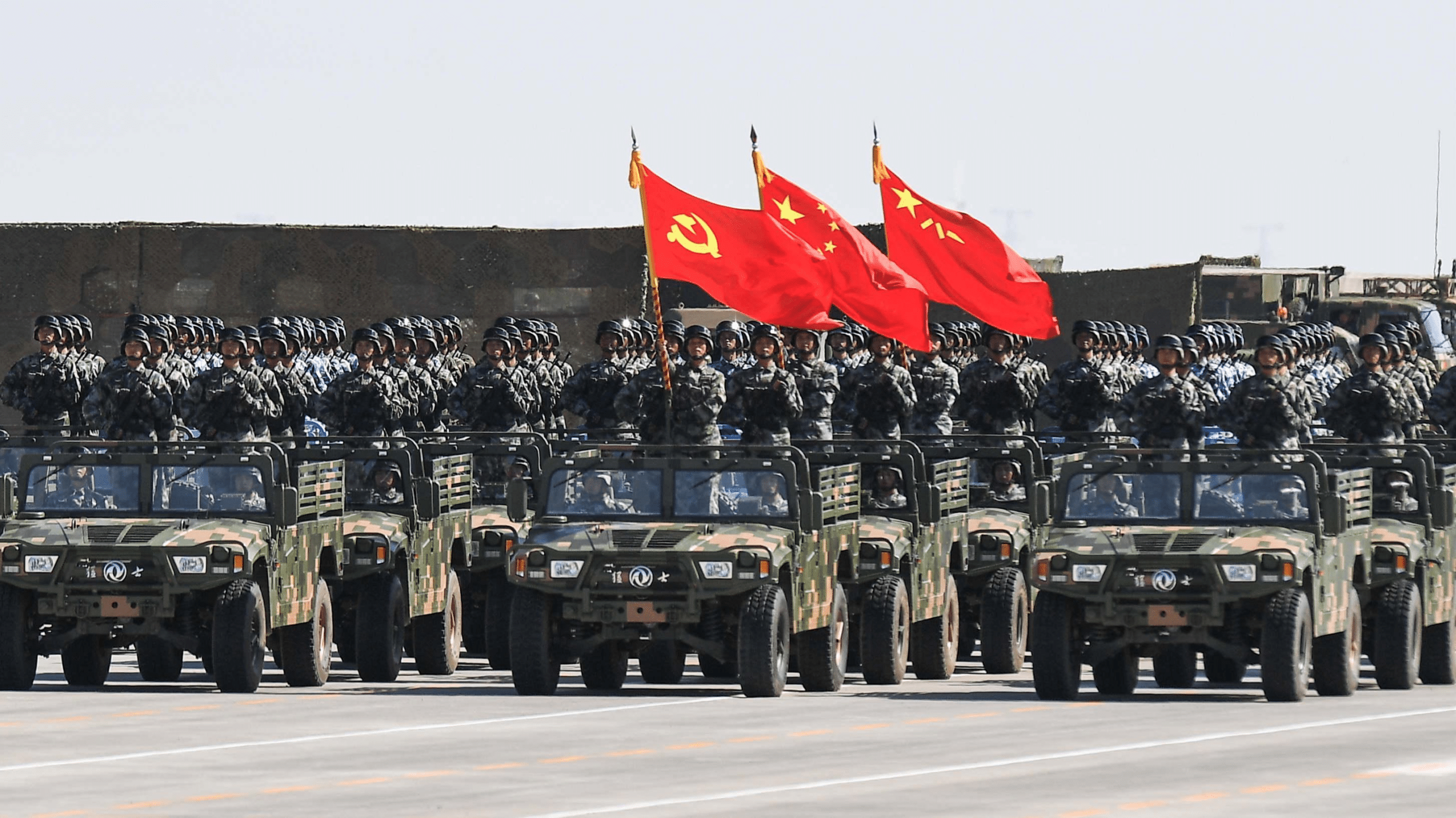
This demand for personnel is no longer limited to industry. It is now also emerging within Russia’s new unmanned systems forces.
In April 2026, a recruitment campaign offered Russian students financial and academic incentives to join these units as operators, engineers, or technical specialists. The offers notably targeted students studying engineering and aeronautics. In the Ryazan region, authorities also set recruitment targets for companies to encourage employees to sign contracts with the Ministry of Defense.
Investigations by independent Russian media have gone further. Groza and Important Stories said they identified 269 educational institutions where students had reportedly faced various forms of pressure to sign contracts with the drone forces, ranging from persistent incentives to threats linked to their academic status.
The phenomenon nevertheless points to a broader shift. Educational institutions are becoming both places where drone-related skills are developed and recruiting pools for the personnel needed to operate these systems, sometimes through questionable methods.
Training must keep pace with technology
Finding enough personnel solves only part of the problem. The skills required for drone warfare are themselves evolving rapidly.
Jamming, changes to radio links, the use of fiber-optic drones, the emergence of interceptor drones, and the growing integration of autonomous functions are changing the conditions in which these systems operate. Training designed around a particular generation of equipment or electromagnetic environment can therefore lose some of its relevance as the adversary adapts.

Ukraine has gradually built an infrastructure designed to generate these skills at greater scale. According to its Ministry of Defense, more than 5,000 unmanned aerial systems operators were trained in 2025 through public and private schools. The country had 34 institutions authorized to train specialists, including 19 centers dedicated to aerial drones.
But scale is only part of the challenge. Some Ukrainian organizations are already expanding their curricula beyond piloting. Killhouse Academy, for example, provides FPV flight training as well as instruction in drone assembly, programming, tuning, and the operation of unmanned ground systems. Its advanced FPV course combines piloting, software, navigation, and technical understanding of the system.
Training is therefore increasingly becoming part of a shorter loop connecting operational experience, system modifications, and the transmission of new practices. The challenge is to industrialize training without freezing what is being taught. Militaries need standards to train thousands of personnel, but those standards must be able to evolve alongside new technologies, adversary countermeasures, and lessons from the battlefield.
From drone specialists to drone-capable forces
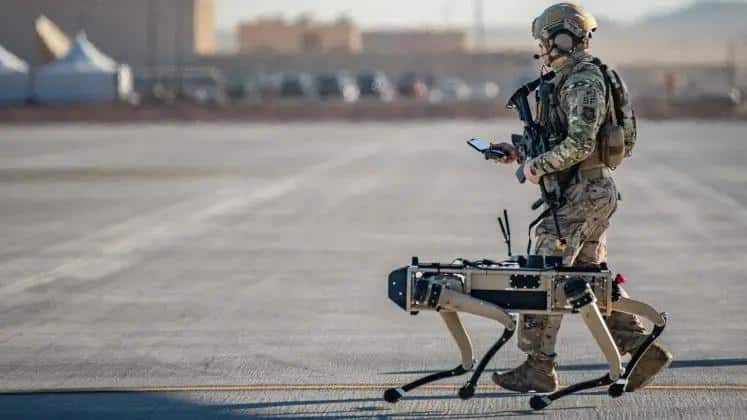
Western militaries are also beginning to transform how they approach drone training. The objective is no longer simply to produce more specialized operators, but to distribute basic drone proficiency across a much larger number of units.
In 2025, the U.S. Army launched its Unmanned Advanced Lethality Course, combining FPV piloting, tactical employment, integration with fires, manufacturing, and repair. The course is also designed to enable trained personnel to pass some of these skills on within their own units.

A similar shift is emerging in Europe. During the first European course dedicated to advanced FPV operations, held in Latvia in June 2026, the European Defence Agency said drone operation should progressively become a fundamental military skill. NATO, meanwhile, aims to increase the number of trained drone operators fivefold by the end of 2027.

This expansion does not mean that every soldier will become a drone specialist. Instead, it creates several levels of proficiency: widely distributed basic familiarity, qualified operators, and, above them, specialists capable of working on electronic warfare, integration, or the technical adaptation of systems.
But this structure itself depends on a limited resource: the personnel capable of training others. Acquiring several thousand drones can happen relatively quickly. Producing several thousand experienced operators , and then enough instructors to keep their skills current, takes much longer.
The drone race therefore operates at three different speeds: producing platforms, training personnel, and keeping their skills current. But the ability to build this human infrastructure cannot be separated from the conditions under which it is created. Expanding recruitment and training requires candidates to understand the roles they are signing up for and to have a genuine choice in doing so.
The Russian case shows what can happen when that boundary becomes less clear. Practices documented by independent investigations, and disputed or downplayed by Russian authorities, show how the accelerated search for labor and skills can also lead to deceptive or coercive recruitment methods.
The human capacity behind drone warfare therefore cannot be measured solely by the number of operators or engineers a state can mobilize. It also depends on its ability to attract, train, and retain those personnel without replacing individual choice with coercion or deception.