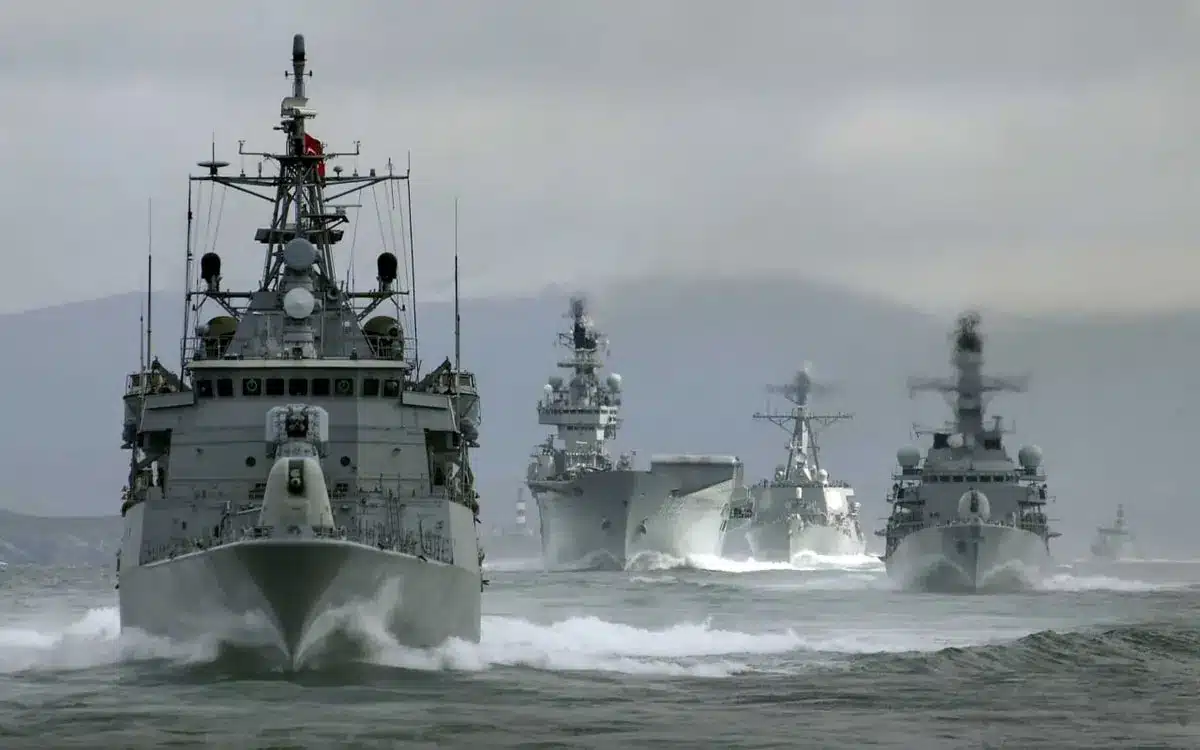



Modern navies were long designed to counter clearly identified threats: supersonic anti-ship missiles, submarines, and combat aircraft. Shipboard defensive architectures reflected that logic. Warships were expected to detect and intercept a limited number of highly sophisticated threats before impact. Recent conflicts, however, are revealing the emergence of a different model.
From Ukrainian naval drones operating in the Black Sea to attacks against commercial shipping in the Red Sea, expendable maritime platforms are gradually reshaping naval warfare. These systems are often slower, cheaper, and far more numerous than traditional threats. Their value extends far beyond direct destructive power. They allow adversaries to saturate defenses, deplete missile inventories, and impose constant pressure on surface combatants. Even when intercepted before impact, they force crews to maintain a high level of alert while continuously mobilizing defensive systems.
This evolution is reintroducing a concept that had become secondary in many Western navies: low-cost naval attrition.
The return of naval attrition
For decades, Western naval forces primarily invested in systems designed to counter a small number of fast, technologically advanced threats. Shipboard defenses were optimized to engage high-end anti-ship missiles within extremely short reaction windows. Naval drones and loitering munitions are changing that equation.
These platforms often feature reduced radar signatures. They operate close to the waterline, follow less predictable trajectories, and can be employed in coordinated attacks. Their sometimes slower speed does not necessarily make them easier to intercept. Defensive systems originally designed for high-speed missile engagements must now handle slower but significantly more numerous targets.
Cost is also changing the nature of the problem. An expendable naval drone may cost only tens or hundreds of thousands of dollars. Intercepting it can require missiles worth several million dollars. This asymmetry becomes increasingly critical when attacks are sustained over time. Saturation is therefore becoming almost as important as direct destruction.
Even when neutralized, drones force warships to maintain constant surveillance. Crews consume more ammunition, sensors remain continuously active, and electronic warfare systems are heavily tasked over long periods. A logic of gradual attrition is reappearing across multiple maritime theaters. The ability to sustain defensive operations over time is once again becoming nearly as important as the technological sophistication of onboard systems.

Ukraine: the Black Sea becomes a naval laboratory
The war in Ukraine has become one of the most significant laboratories for this new form of naval warfare. Without a conventional fleet comparable to Russia’s, Ukraine has developed a strategy centered on expendable naval drones capable of threatening far larger and more expensive vessels.
The Magura naval drone illustrates this approach. The Magura V5 can travel several hundred kilometers at high speed while carrying an explosive payload weighing several hundred kilograms. Despite its small size, it can threaten significantly larger ships. Its design prioritizes speed, low observability, and coordinated attacks.
These drones have been used against several Russian vessels in the Black Sea, forcing Moscow to strengthen defensive measures and adapt fleet positioning. Their importance, however, goes beyond physical destruction alone. Ukrainian naval drones have gradually altered the operational behavior of the Russian fleet. Certain naval activities have been reduced, while psychological pressure on crews has significantly increased. More importantly, this evolution demonstrates that a conventional naval power can be disrupted by platforms that are far cheaper, rapidly produced, and expendable.
The Sea Baby pushes this logic even further. Larger than earlier Ukrainian platforms, it offers significant endurance and can carry very heavy explosive payloads. Some observed variants also appear capable of carrying additional weapons or enhanced guidance systems. The naval drone is therefore gradually evolving into a multifunctional platform. Sea Baby also illustrates another critical trend: rapid adaptation.
Ukrainian developers continuously modify these platforms to reduce vulnerability to jamming, improve navigation, and extend operational range. This rapid iteration cycle increasingly mirrors the accelerated innovation model already observed in aerial and ground drone warfare. The Black Sea is therefore becoming an environment where expendable drones, electronic warfare, maritime surveillance, and close-in naval defense increasingly converge.

Red Sea: when interception costs become a strategic problem
Attacks against maritime traffic in the Red Sea reveal another dimension of this transformation in naval warfare.
The drones and loitering munitions employed by the Houthis do not always match the performance of advanced anti-ship missiles. Yet their repeated use is sufficient to generate major strategic effects.
Maritime traffic has had to be reorganized. Some commercial shipping routes have been altered, and several Western navies have been forced to maintain a permanent defensive presence in the region.
This situation highlights a central issue: protecting maritime traffic over time becomes extremely expensive when attacks rely on relatively cheap expendable systems.
Military vessels must continuously detect, identify, and neutralize multiple simultaneous threats. This mission constantly mobilizes radars, interceptor missiles, embarked helicopters, and electronic warfare assets.
The cost of defense extends far beyond the interception itself.
Navies must also sustain deployed vessels over long periods, support crews, replenish munitions inventories, and maintain the long-term security of commercial shipping lanes.
This dynamic is gradually reshaping how naval forces evaluate defensive architectures.
For decades, the priority was intercepting a limited number of highly sophisticated threats. Today, navies may need to neutralize large numbers of simpler targets without rapidly exhausting available resources.
The challenge is becoming as industrial as it is operational.

Iran and China: saturation as naval doctrine
For years, Iran has developed a strategy based on naval asymmetry rather than direct confrontation with technologically superior fleets.
This approach combines drones, fast attack craft, anti-ship missiles, electronic warfare, and expendable platforms capable of exerting continuous pressure on significantly more powerful naval forces.
The objective is not necessarily the immediate destruction of an opposing fleet. Instead, the goal is to complicate deployments, saturate defenses, and gradually increase operational costs.
In confined environments such as the Strait of Hormuz, this logic could severely disrupt maritime traffic while imposing significant operational strain on naval forces tasked with securing the area.
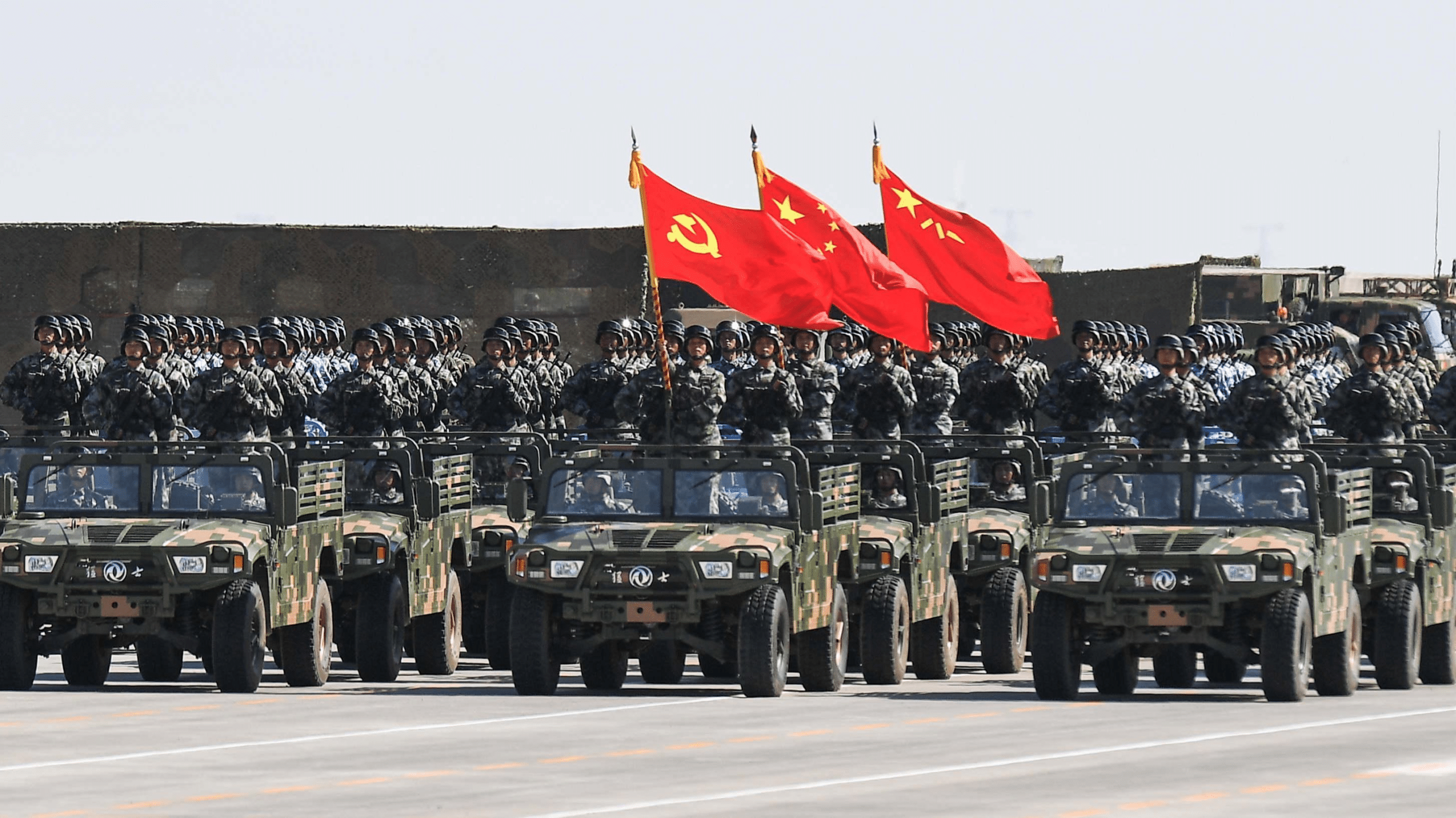
China also appears to be moving toward multidomain saturation architectures.
In a Taiwan-related scenario, the coordinated use of aerial drones, uncrewed naval platforms, and loitering munitions could exert continuous pressure on opposing naval task groups.
This strategy is not focused solely on immediate ship destruction.
It also seeks to gradually exhaust defensive capabilities. Missile inventories decline, crews remain under permanent stress, and logistics chains must sustain continuous operations.
Saturation is therefore becoming a complete doctrine in which mass, attrition, intelligence, electronic warfare, and industrial capacity are tightly interconnected.
The warship becomes vulnerable again
Modern navies must now rethink several fundamental balances.
First, they need to restore close-in defensive capabilities able to rapidly engage large numbers of low-cost targets. The renewed emphasis on automatic cannons, laser systems, jamming, and interceptor drones reflects this requirement.
Warships must also maintain much more persistent surveillance against threats operating close to the waterline or at low altitude.
This evolution increases cognitive pressure on crews and requires continuous resource consumption.
Navies must also reconsider the economic sustainability of their defensive architectures.
A defense model relying exclusively on expensive interceptor missiles becomes increasingly difficult to sustain against repeated expendable drone attacks.
The ability to rapidly produce lower-cost interceptors, automate parts of the defensive chain, and integrate more electronic warfare capabilities is therefore becoming essential.
Naval drones do not replace traditional anti-ship missiles or submarines.
They nevertheless add a new layer of persistent saturation that is reintroducing mass and attrition into the core of modern naval warfare.
Naval vulnerability is changing in nature
Naval drones and loitering munitions are gradually reintroducing saturation and attrition dynamics that had long become secondary in many Western navies.
The conflicts in the Black Sea and the attacks in the Red Sea demonstrate that relatively simple platforms can now generate operational and strategic effects disproportionate to their cost.
This evolution is forcing navies to simultaneously rethink defensive architectures, missile inventories, electronic warfare, maritime surveillance, and industrial resilience.
Naval warfare is entering a phase in which cost, endurance, and the ability to sustain defensive operations over time are becoming just as important as technological sophistication.
Modern navies were originally designed to survive a limited number of extremely sophisticated threats.
They must now learn to withstand attacks that are simpler, repeated, numerous, and economically sustainable for the adversary.
The vulnerability of surface combatants is therefore not disappearing with technological sophistication. It is reemerging in a more diffuse, persistent, and potentially harder-to-sustain form.