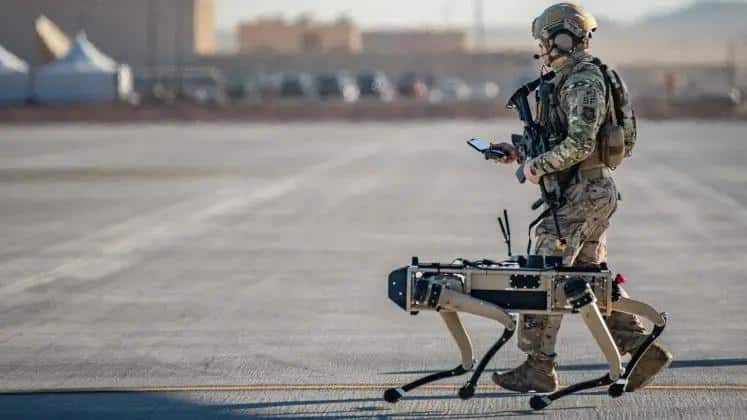



Across Europe, the first half of 2026 was marked by a succession of multinational exercises involving land, air, and naval forces, as well as cyber specialists and electronic warfare units. Considered individually, each exercise serves a specific operational objective. Taken together, however, they provide a particularly revealing insight into the assumptions that are now shaping European military planning.
The most significant trend is not that Europe is conducting more exercises, it is training differently.
The exercises conducted during the first six months of 2026 suggest that European armed forces are preparing for conflicts that are faster, more interconnected, more contested, and more demanding than those that shaped military thinking throughout the post-Cold War era.
The scale of European military exercises continues to grow
The increase in military training activity across Europe has become particularly noticeable over the past three years.
This trend can be observed through the growing number of exercises listed in the official calendar of the Supreme Headquarters Allied Powers Europe (SHAPE):
The evolution of major NATO and multinational exercises in Europe:
| Domain | 2024 | 2025 | 2026 Projection | Growth 2024–2026 |
| Land | 15 | 22 | 31 | +107% |
| Air | 8 | 13 | 19 | +138% |
| Maritime | 10 | 14 | 21 | +110% |
| Cyber / C2 | 6 | 11 | 15 | +150% |
One of the most noteworthy findings is that the fastest growth is not occurring in the traditional land warfare domain. Cyber, command-and-control, and integrated air operations are expanding even more rapidly, reflecting the growing importance of networks, information flows, and decision speed in modern warfare.
This trend is also evident in recent large-scale exercises. Steadfast Dart 2026 involved approximately 10,000 service members from 13 Allied nations, making it one of NATO’s largest deployments of the year.

NATO’s new Regional Defense Plans have reinforced the Alliance’s focus on collective defense and reinforcement operations. The accession of Finland and Sweden has expanded NATO’s operational geography. At the same time, recent conflicts have underscored the importance of readiness, resilience, and interoperability.
The result is a sustained increase in the scale, frequency, and complexity of military training activities across Europe.
Multi-domain operations are becoming the standard
Modern military operations rely on the ability to connect sensors, command networks, effectors, and decision-makers across multiple domains simultaneously.
A maritime sensor may provide targeting data to an aircraft. That aircraft can then relay the information to an air defense system or a long-range fires unit. Military effectiveness increasingly depends on the rapid flow of information.
The 2026 edition of Ramstein Flag brought together more than 200 aircraft operating from over 20 locations across Europe.
The growth of Ramstein Flag perfectly illustrates the transformation of NATO exercises. The objective is no longer simply to fly together. It is now to fight together across multiple domains simultaneously.
Northen Europe is emerging as NATO’s strategic laboratory
For much of the post-Cold War period, European armed forces focused primarily on expeditionary operations in the Balkans, Afghanistan, the Middle East, and Africa. Today, the Alliance’s strategic center of gravity has shifted northward.
Exercises such as BALTOPS, Dynamic Mongoose, Cold Response, and numerous Nordic air operations illustrate the growing importance of the Baltic region, the Arctic, and the North Atlantic.
BALTOPS 2026 brought together several thousand military personnel, warships, aircraft, and multinational units operating across the Baltic region.
The accession of Finland and Sweden has fundamentally transformed NATO’s northern posture.
The Baltic Sea has now, to a large extent, become an internal sea for the Alliance. This transformation has significantly reshaped NATO’s strategic geography, increasing the importance of maritime reinforcement routes, the protection of undersea infrastructure, and regional deterrence.
Recent incidents involving undersea cables and critical infrastructure have also heightened attention to seabed security, an issue that is now appearing with increasing frequency in Allied planning and exercises. Concerns surrounding undersea infrastructure, reinforcement routes, anti-submarine warfare, and regional deterrence are now focusing attention on areas that previously occupied a more secondary place within the Alliance.
The geography of NATO exercises increasingly reflects the geography of the Alliance’s strategic concerns.
Speed is becoming more important than mass
Another trend that became apparent during the first half of 2026 is the growing emphasis on speed.
For decades, military power was measured through quantitative indicators: the number of tanks, aircraft, ships, or personnel. Those metrics remain important, but many recent exercises show that planners are now focusing on a different question:
How quickly can a force be deployed where it is needed?
The answer depends on mobility, logistics, infrastructure, command responsiveness, and multinational coordination. In this context, logistics is gradually becoming an operational capability in its own right rather than simply a support function.
Steadfast Dart 2026 provided a concrete demonstration of this evolution. Rather than focusing solely on concentrating forces, the exercise tested NATO’s ability to deploy, integrate, and sustain combat forces across multiple countries under extremely compressed timelines.

The exercise also highlighted the growing importance of military mobility and reinforcement corridors across Europe.
In a future conflict, the force capable of moving its assets the fastest may gain a decisive advantage long before larger formations arrive on the battlefield.
Lessons from recent conflicts are becoming doctrine
Ukraine remains the most visible source of operational lessons learned today, but it is far from the only one. Developments in the South Caucasus, the Red Sea, and the Middle East are also reshaping military thinking.
Across Europe, drones have become a routine component of military exercises. An increasing number of drills now incorporate drone and counter-drone scenarios, reflecting the growing influence of unmanned systems on modern military operations.
Cyberattacks, GNSS disruption, electromagnetic interference, and contested information environments are no longer treated as exceptional circumstances. They are gradually being integrated as standard conditions of modern warfare.
Locked Shields 2026 brought together approximately 4,000 participants from more than 40 countries, making it the world’s largest live-fire cyber defense exercise.

Military organizations are training to continue fighting despite persistent disruption. That distinction may prove fundamental to understanding future conflicts.
Europe is rehearsing a different kind of war
The first half of 2026 suggests that European armed forces are increasingly preparing to fight, sustain, and coordinate operations in environments where communications are degraded, logistics are contested, and decisions must be made at extraordinary speed.
Military exercises have always reflected the assumptions planners make about future warfare. The trends observed during the first half of 2026 suggest that European militaries now anticipate conflicts conducted simultaneously across multiple domains, shaped by networked operations, unmanned systems, and the ability to reinforce allied forces rapidly.
Across the land, air, maritime, cyber, and electromagnetic domains, military organizations are increasingly training to operate in an environment defined by persistent disruption, accelerated decision-making, and multidomain coordination.
Europe is not simply conducting more military exercises,it is preparing for a different kind of war. Today’s exercises may offer one of the clearest previews of tomorrow’s battlefield.