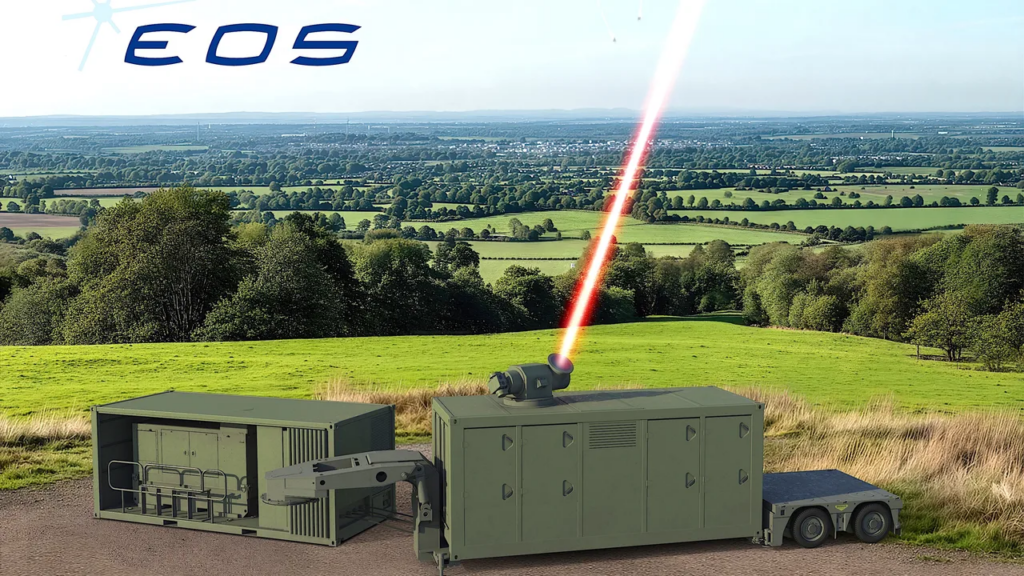
The Netherlands is exploring plans to manufacture the Apollo counter-drone laser system in Europe, as Australian defence company Electro Optic Systems continues work on the country’s first 100-kilowatt-class laser order in Singapore.
A letter of intent signed on September 24, 2026, covers further development of the technology and the possibility of establishing a manufacturing facility in the Netherlands, supported by a European supply chain.
For now, the two projects remain separate. In its October 26 quarterly report, Electro Optic Systems confirmed that work on the existing Dutch order was continuing in Singapore. The proposed manufacturing operation in the Netherlands remains under consideration.
For the Netherlands, the project is about more than acquiring a counter-drone weapon. It could also establish a domestic industrial base capable of manufacturing, maintaining and upgrading laser systems in Europe.
The Netherlands’ first laser order is being fulfilled in Singapore
On August 5, 2025, Electro Optic Systems announced a €71.4 million contract for a counter-drone capability built around a 100-kilowatt-class laser. The customer was initially identified only as a European NATO member state.
Running from 2025 to 2028, the contract covers development, manufacturing and delivery, along with spare parts, training and technical documentation.
The Dutch Ministry of Defence later confirmed the order, describing it as a development project intended to deliver a working prototype by 2028 while building national expertise in laser technology.
On February 6, 2026, Electro Optic Systems officially opened its Singapore facility, bringing together high-energy laser manufacturing, integration, testing and support activities. The site is also involved in fulfilling the Dutch contract.
The proposed Dutch facility would form part of the company’s international expansion. According to the Dutch Ministry of Defence, Electro Optic Systems wants to develop and manufacture its systems in the Netherlands, where it is also considering establishing its European operations.
The division of work between Singapore and any future Dutch facility has yet to be agreed. No plans have been announced to transfer production under the existing contract to Europe.
Apollo compared with other military laser programmes
Electro Optic Systems offers Apollo in a stated power range of 50 to 150 kilowatts. The system ordered by the Netherlands falls within the 100-kilowatt class, but power output alone provides only a limited basis for comparison with other laser weapons.
A laser’s effectiveness depends on more than its nominal power. Beam quality, tracking accuracy, atmospheric conditions and the time a target remains exposed all affect how much energy reaches it. Electrical power and cooling requirements also place constraints on system integration, as noted by the United States Government Accountability Office.
Several countries are developing military laser systems, although their designs and intended roles vary.
The United Kingdom and Germany are currently focusing on naval applications. Britain’s DragonFire programme is scheduled for its first installation aboard a Type 45 destroyer in 2027. In Germany, MBDA Deutschland and Rheinmetall are developing a naval laser system following trials of a demonstrator aboard the frigate Sachsen. The companies are targeting operational capability in 2029.
China unveiled the LW-60 in 2024, a mobile laser system intended, among other roles, to counter small drones.
Japan is also developing a mobile counter-drone laser. Its Acquisition, Technology and Logistics Agency is working with Mitsubishi Heavy Industries on a 10-kilowatt system mounted on an eight-wheel-drive truck. According to Janes, Japanese ground forces were testing the prototype in 2025.

Israel has taken a different approach with Iron Beam, developed by Rafael to complement existing missile defences. The first system was handed over to the armed forces on December 28, 2025. The delivery marked an important industrial milestone, although it did not necessarily mean the system had reached full operational availability.
The programmes reflect different priorities. Some are designed for mobile ground-based defence, others for warships or integration into wider air defence networks. Several countries are also seeking to establish their own manufacturing capabilities rather than rely entirely on foreign suppliers.

Local manufacturing does not mean full control of the technology
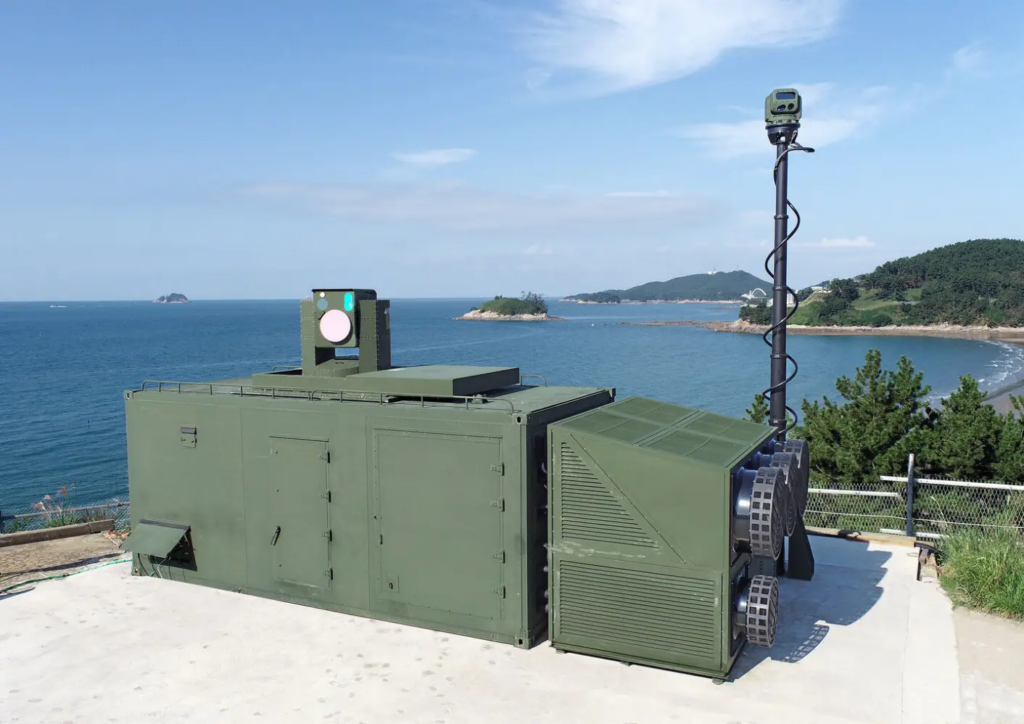
South Korea offers a useful comparison. Its Cheongwang counter-drone system initially relied on an imported laser source, despite being produced domestically. The case highlights a potential limitation of the Dutch project: local manufacturing does not necessarily mean control over the technology inside the weapon.
According to South Korean authorities, Cheongwang began entering service in December 2024. Its original configuration used an imported laser source, the critical component responsible for generating the high-energy beam used to neutralise drones.
In June 2026, South Korea’s defence acquisition agency announced that it had developed and qualified a domestic laser source for future production units. The agency said the change would increase the system’s domestic content, measured by value, from 76% to 90%. It also reported better performance during tests with the new component.
For the Netherlands, much will depend on which activities are ultimately brought to Europe. Assembling complete systems, manufacturing critical components, maintaining equipment and modifying software each require different technical expertise and access to intellectual property.
The letter of intent refers to a European supply chain managed from the Netherlands. It does not, however, identify prospective suppliers, the investment required or which technologies could eventually be manufactured locally.
From manufacturing to an operational military capability
Building Apollo in Europe would be only one part of bringing the system into military service. The laser would still need to be qualified, connected to detection and command networks, and supported throughout its operational life.
The Dutch Ministry of Defence describes the initial order as a development project expected to deliver a working prototype in 2028. Electro Optic Systems, meanwhile, refers to a first production unit based on technology previously demonstrated at a lower power level.
The difference matters. A working prototype is not the same as a weapon ready for military service. Testing, integration and long-term support remain essential before a system can become an operational capability.
As examined in an earlier Defense Innovation Review article, laser weapons can complement conventional air defence systems, but their effectiveness depends on operating conditions, engagement parameters and their place within a layered defence architecture.
Electro Optic Systems says it owns Apollo’s technology and intellectual property and offers technology transfers to customers. The terms under discussion with the Netherlands have not been disclosed, including any rights covering software, critical components or future system upgrades.
Further agreements will need to establish what would actually be manufactured in the Netherlands, how work would be divided between European and Singaporean facilities, and which technology rights would be granted to local partners.
Those details will determine whether the project primarily establishes a European manufacturing presence or gives the Netherlands the ability to produce, maintain and further develop military laser systems domestically.