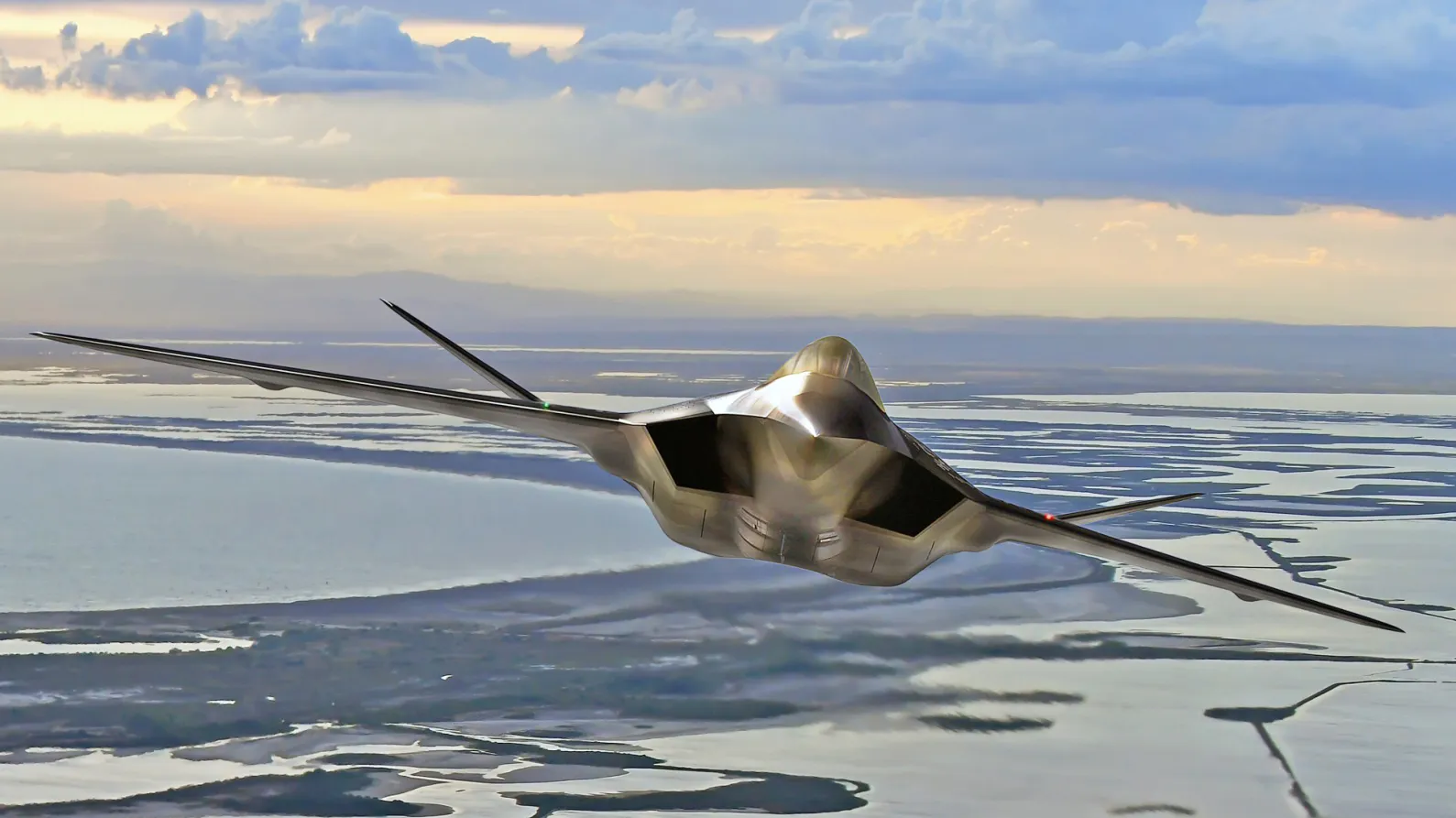




Sweden has expanded its work on a future combat air system with new contracts awarded to Saab and GKN Aerospace in September 2026. The work includes two versions of an autonomous flight demonstrator, intended to test technologies at subsonic and supersonic speeds.
The contracts are part of Sweden’s Konceptprogram Framtida Stridsflygsystem (KFS), which is examining options for the country’s air combat capabilities beyond Gripen. Both crewed and uncrewed aircraft are under consideration, but Stockholm has yet to decide what form the future system will take or how it will be developed.
KFS moves from studies to demonstrators
Sweden’s Defence Materiel Administration (FMV) awarded Saab a contract for the current phase of research in March 2024. Covering 2024 and 2025, the studies examined crewed and uncrewed aircraft, how they might operate together within a larger system, and the technologies needed to support them.
Saab has been working alongside the Swedish Armed Forces, the Swedish Defence Research Agency (FOI) and GKN Aerospace.
In October 2025, FMV placed another order worth approximately SEK 2.6 billion, extending the work through 2027. Concept studies, technology development and demonstrator activities would continue in parallel.
A further contract announced by Saab on September 9, 2026, is valued at approximately SEK 2.9 billion. It covers work through 2028, with options for 2029 and 2030. The main areas include systems integration, autonomy, signature reduction, propulsion, digital development and future manufacturing capabilities.
FMV plans to complete and fly two versions of an autonomous demonstrator for subsonic and supersonic testing, along with integrating equipment needed for the trials.
The flights are intended to help identify technical risks before Sweden commits to a future combat air system. They remain planned activities, not completed milestones.
Crewed fighters and drones: no final architecture yet
KFS is examining how future air combat capabilities could be distributed across several complementary aircraft. The studies cover which functions should remain aboard crewed fighters and which could be assigned to uncrewed platforms.
On August 22, 2026, Saab unveiled a full-scale mock-up of its A3-001 uncrewed aircraft concept.
The company envisions the aircraft conducting electronic warfare, suppression of enemy air defenses and precision strikes in heavily contested airspace.
Saab describes A3-001 as a low-observable platform with a high degree of autonomy, intended to complement Gripen and future crewed aircraft.

A3 remains a Saab concept rather than a system selected by the Swedish government. The company has suggested that further development could follow in the mid-2030s if Sweden chooses this approach. The mock-up does not represent an aircraft on order.
Distributing missions across several platforms could give commanders more flexibility in deciding which aircraft to expose to the greatest risks.
Much would depend on how well those aircraft coordinate, maintain communications and continue operating when data links are disrupted. Public announcements have yet to explain how Sweden intends to address these challenges.
Technical priorities: stealth, autonomy and power
The information released so far identifies areas of research rather than a final set of aircraft requirements.
Saab is working on autonomy and signature reduction, but has not disclosed a definitive configuration or quantified performance targets.
GKN Aerospace is focusing on propulsion, thermal management and electrical power.
In September 2026, the company received a contract worth approximately SEK 390 million, covering work through 2028. The agreement also includes technologies intended to reduce aircraft detectability.
More powerful onboard systems require additional electrical power and generate more heat. Managing both affects aircraft design, performance and detectability.
GKN’s work will therefore have to address how propulsion, cooling and electrical systems can be integrated without compromising the aircraft’s overall performance or low-observable characteristics.

The announcements provide no reliable basis for assigning a range, weapons payload, aircraft weight, unit price or supercruise capability to Sweden’s future combat aircraft.
Sweden keeps three industrial options open
In June 2026, the Swedish government launched an independent review of three options for its future combat air system: developing a national system, joining an international development program or purchasing a foreign system.
The review will assess the economic, military, diplomatic and security implications of each approach.
The KFS research would remain relevant under all three options.
It could provide a foundation for domestic development, strengthen Sweden’s contribution to an international partnership or help evaluate competing foreign aircraft proposals.
Maintaining that expertise is a central industrial objective. Sweden wants to retain enough technical knowledge to make an informed decision rather than commit to a system whose long-term development it may have little ability to influence.
The ability to design, integrate and upgrade a combat air system matters alongside the initial acquisition of the aircraft itself.
A transition that will take decades
The government’s review is due to submit its final report by September 15, 2027. Sweden intends to be in a position to make a decision in principle on its future combat air system by 2030.
The Gripen is expected to remain operational beyond 2050. Work on capabilities for the period after 2040 should not be mistaken for a plan to retire the aircraft at that point.

Saab aims to fly uncrewed demonstrators with fighter-like characteristics before 2030. Their flight tests will provide data to compare the concepts and assess their technical feasibility.
The demonstrator program will help Sweden assess which combination of crewed and uncrewed aircraft could meet its future operational requirements. It will also provide a clearer basis for deciding how much of the next combat air system Sweden can design and manufacture itself.