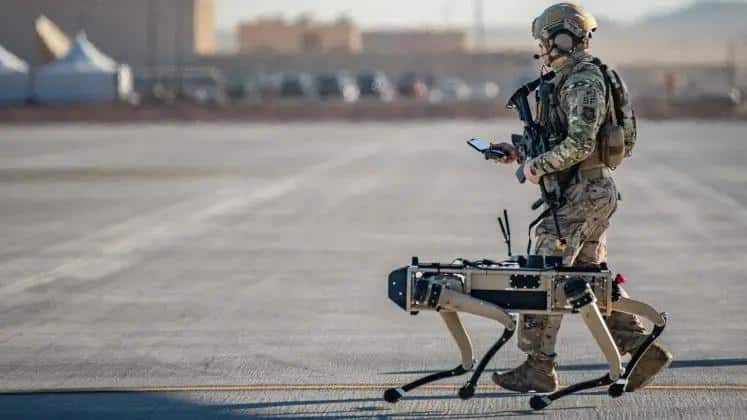



When a military exercise mobilizes tens of thousands of troops, hundreds of armored vehicles, full air components, and logistics corridors stretching across Europe, any comparison with a nationally led format such as ORION can appear uneven from the start.
At first glance, the numbers seem decisive. Steadfast Defender has involved roughly 90,000 personnel in its most recent large-scale iteration. Defender Europe is built around the deployment of American and allied forces across the continent. Against such benchmarks, ORION is undeniably smaller.
Yet judging military exercises by scale alone is like assessing a fleet by tonnage without considering its mission set. Each exercise is designed to answer a different operational and political question. Some are meant to demonstrate allied mass and reinforce collective defense. Others are focused on strategic mobility, regional readiness, or combat under extreme climatic conditions. ORION belongs to a different category. It is not primarily intended to showcase coalition scale. Its real purpose is to test whether France’s own military model remains coherent, credible, and adaptable under the pressures of modern war.
That is precisely why the comparison matters. ORION may not be the largest Western exercise, but it may be one of the most relevant for assessing how a medium-sized, high-end military power prepares itself for high-intensity conflict.
Where ORION stands in 2026
Any ranking of major Western exercises must be handled with caution. Formats vary by year, scenario, and political context, and direct comparisons are never perfectly symmetrical. Even so, the broad picture is clear. Steadfast Defender sits at the top in terms of political significance and collective military scale. Defender Europe remains the benchmark for strategic mobility and reinforcement across the continent. ORION belongs in the next tier: smaller in manpower, narrower in geography, but highly significant in terms of joint-force transformation and direct national utility. Behind it come exercises such as Cold Response, focused on Nordic and amphibious warfare, and Anakonda, which remains important for land-heavy readiness on the eastern flank.
That hierarchy is useful, but it is only meaningful if one understands what each exercise is actually designed to do.

NATO’s largest exercises and the logic of strategic mass
Steadfast Defender: the benchmark for collective defense
Today, Steadfast Defender stands as NATO’s foremost political and operational benchmark for collective defense. Its importance goes well beyond the tactical level. At its core, the exercise is intended to demonstrate that allied countries can still reinforce one another rapidly in the event of a major crisis, synchronize their command structures, and defend the European continent collectively.
Such an exercise first tests the alliance’s ability to move forces from North America and other theaters into Europe, then to redistribute them quickly toward the sectors judged most critical. It also measures whether dozens of national headquarters can operate at a common tempo, using compatible procedures and decision-making chains that remain responsive under pressure.
Interoperability is central to this effort. Enabling armored formations, aircraft, communications systems, and logistics assets from multiple countries to function together remains a major challenge, even among close allies. Exercises of this scale help identify technical friction, organizational bottlenecks, and procedural incompatibilities before a real crisis exposes them brutally.
Steadfast Defender also serves a clear political purpose. It gives concrete expression to the credibility of collective defense by signaling that an attack against one ally would trigger a coordinated, large-scale response. Its value therefore lies not only in the number of forces mobilized, but in the strategic message sent to both partners and potential adversaries.

Defender Europe: strategic mobility at continental scale
If Steadfast Defender is the alliance’s benchmark for collective defense, Defender Europe is above all a test of strategic mobility. Its core question is straightforward: can American and allied reinforcements be moved into Europe quickly, sustained across multiple corridors, and positioned where they would actually be needed in a crisis?
That may sound logistical rather than dramatic, but it goes to the heart of Western military credibility. Moving forces across the Atlantic is only the beginning. They must then pass through ports, rail hubs, road networks, depots, maintenance nodes, and staging areas, all while remaining protected and supported. Exercises of this type remind observers of a reality too often overlooked in peacetime debate: strategic logistics remains one of the foundations of Western military power.
ORION: smaller, but built for a different purpose
ORION is not designed to compete with NATO’s largest exercises on scale. It is designed to answer a different question altogether.
Where the biggest allied drills are built around coalition mass and multinational reinforcement, ORION is primarily intended to test French operational readiness and military transformation. France uses it to assess its ability to conduct a high-intensity conflict by mobilizing all major components of national military power at the same time. That includes land combat, air operations, naval action, digital effects, operational sustainment, allied coordination, and autonomous national command.
This gives ORION a distinctive strategic purpose. Its role is not simply to put a coalition on display. It is to verify the internal coherence of the French military model, from frontline units to the strategic level of command.
That distinction is essential. Many multinational exercises are, by design, exercises in aggregation. They test the alliance’s ability to combine national contributions within a common framework. ORION instead examines whether a complete national system is robust enough to function under stress before integrating into a broader coalition. In that sense, it is both a test of internal credibility and a rehearsal for collective action.
Where ORION falls short of NATO’s largest formats
The first limitation is scale. A mobilization of around 90,000 personnel does not produce the same operational effects as a format involving roughly 10,000 to 12,000 troops. The management of movement flows, rotations, simulated casualties, reinforcement cycles, and large-scale maneuvers changes dramatically with numbers. At that level, sheer volume becomes an operational factor in itself.
The second limitation is geographic depth. NATO’s largest exercises can span multiple countries, ports, logistics corridors, and reinforcement axes. They test movement and coordination at continental scale. ORION remains, by nature, centered on France and its immediate approaches. That makes it more focused, but it also means it cannot reproduce the same level of trans-European complexity.
The third limitation lies in coalition density. Coordinating more than thirty nations creates specific challenges in language, doctrine, communications, rules of engagement, hierarchy, and political sensitivity. A nationally led exercise cannot fully replicate the friction, and the value, of managing that level of multinational complexity. On this point, the largest NATO drills possess a distinct operational and political weight that ORION cannot match.
Where ORION may actually be stronger
And yet ORION has advantages that should not be underestimated.
The first is direct utility for French forces. Because it is designed around French requirements, it allows the armed forces to test their own organizational reality without ambiguity. Force structure, decision-making chains, inter-service coordination, actual platform availability, sustainment procedures, and the relevance of national doctrine can all be assessed under conditions closer to operational reality than in many multinational formats.
That design freedom matters. Problems revealed during ORION cannot easily be blamed on coalition complexity or external constraints. They point directly to French strengths and weaknesses. As a result, the lessons learned are immediately usable. Procedures can be adjusted, organizational shortcomings corrected, modernization priorities refined, and command methods revised without waiting for a multinational consensus.
The second advantage is scenario coherence. Large allied exercises must accommodate many political imperatives. ORION can push further into scenarios that are specifically relevant for France, such as rapid force generation, homeland protection, early-entry operations, or the integration of national command with allied support under a French-led framework.
The third advantage is transformation speed. ORION provides a setting in which France can test the real operational effects of systems such as the Griffon armored vehicle, the Jaguar reconnaissance and combat vehicle, the Caesar self-propelled howitzer, the Rafale fighter, the A400M Atlas, and the MQ-9 Reaper. This is not merely a matter of showcasing equipment. It is about understanding whether these systems, once integrated into a joint force under pressure, actually improve combat effectiveness, responsiveness, and survivability.
That gives ORION a practical modernization value that many larger exercises do not necessarily possess to the same degree.

Innovation and adaptation: a potential French advantage
The biggest military exercises often impress by the number of troops engaged, the geographic scope involved, and the diversity of participating forces. Modern warfare, however, no longer rewards mass alone. It rewards adaptation speed.
That is where ORION may hold a genuine advantage. A more compact, nationally controlled format can sometimes learn faster than a vast multinational machine. It can test new operating concepts more quickly, shorten the loop between observation and correction, and convert lessons learned into institutional change with less inertia.
This matters particularly in areas such as tactical drone integration, counter-drone defense, the fusion of intelligence and fires, the reduction of electronic signatures, more reactive maintenance models, and more agile forms of command. These are not marginal issues. They are now central to battlefield survivability and operational tempo.
In this sense, ORION’s smaller size can become a strength rather than a weakness. It may be less impressive in raw scale, but it can be more effective as a learning instrument.
What this comparison says about France’s military standing
France is not a mass military power on the scale of the United States. That is neither controversial nor a sign of decline. It simply reflects structural realities tied to demography, budgetary scale, industrial capacity, and the global reach of American force posture.
France nevertheless remains one of Europe’s leading military powers. It retains an autonomous command capability able to plan and conduct complex operations, a credible air force built around the Rafale, and a high-end naval component capable of operating far from national territory. Its armed forces remain professional and deployable, while its defense industry continues to sustain broad expertise across land, naval, air, missile, and electronic systems. Added to that is a substantial body of operational experience accumulated across multiple theaters over the past two decades, experience that continues to shape doctrine and professional culture.
ORION reflects this intermediate position with unusual clarity. France does not possess the scale of the largest allied military powers, but it does retain the institutional depth, strategic ambition, and joint-force sophistication of a first-rank European actor. ORION is smaller than NATO’s flagship drills, but often more complete and more demanding than many regional formats because it forces France to test command capacity, inter-service integration, modernization effects, and national coherence at the same time.

Final verdict
ORION does not operate in the same category as NATO’s largest exercises if the comparison is based on raw size alone.
But size is not the only metric that matters. If the benchmark is the ability to transform a national force quickly, test its equipment under realistic conditions, validate its doctrine, and expose its real weaknesses before war does, then ORION clearly belongs in Europe’s top tier.
NATO’s biggest exercises demonstrate collective mass and alliance cohesion. ORION tests whether France’s own military model remains credible under the pressures of modern war.
In 2026, that distinction matters every bit as much as the numbers.