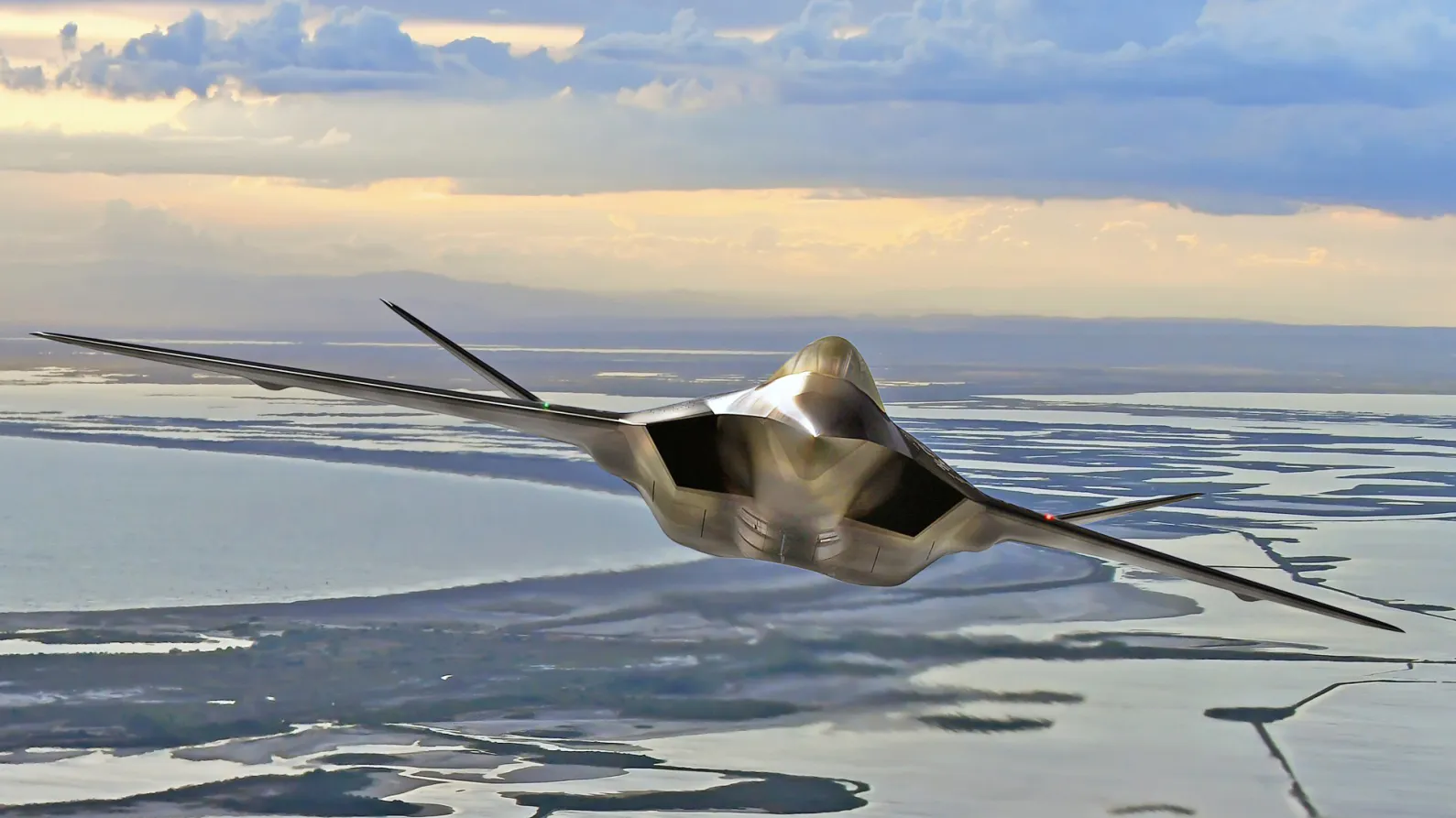


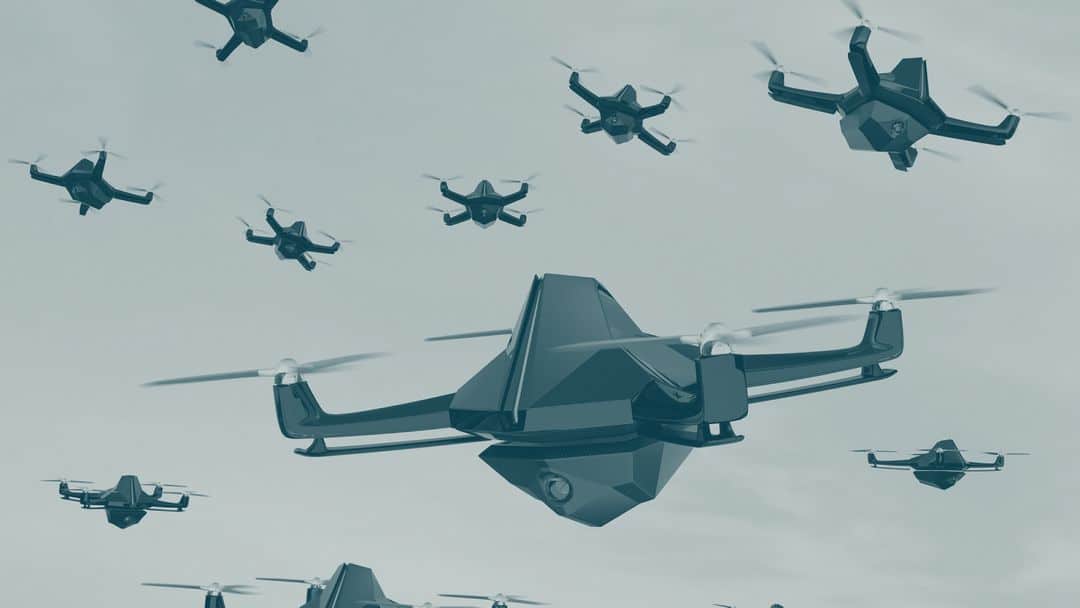
The rapid expansion of uncrewed systems has already become one of the defining drivers of global military transformation. In just a few years, drones and other uncrewed platforms have moved from niche capabilities to central tools of modern warfare across land, air, surface maritime and undersea environments. Their proliferation is reshaping tactics, force employment costs, defense industrial structures and parts of the broader geopolitical balance.
This shift goes far beyond the aircraft itself. The modern drone is no longer just a platform. It is part of a wider military architecture built around sensors, resilient data links, autonomous navigation, electronic warfare, software, rapid manufacturing and distributed maintenance. According to Grand View Research, the global drone market could reach 96.4 billion dollars in 2026, with sustained growth projected across the decade.
That aggregate figure, however, masks sharply different regional dynamics. The rise of uncrewed systems does not follow a single pattern. It takes distinct forms depending on the geographic, industrial and strategic constraints of each theater.
Ukraine: the world’s most important laboratory for drone warfare
No theater has accelerated the military evolution of drones more dramatically than Ukraine. The ongoing war has turned modified commercial quadcopters, loitering munitions and naval drones into routine instruments of combat. In February 2026, Reuters reported that first-person-view drones were making armored maneuver in open terrain far more dangerous, significantly reducing traditional freedom of movement.
The most important shift, however, is industrial rather than tactical. Kyiv is no longer focused only on acquiring available systems. It is now trying to produce at scale, adapt existing models rapidly and compress innovation cycles. In April 2026, the Czech group Czechoslovak Group was targeting roughly 1,000 miniature turbojet engines in 2026, some of them intended for Ukrainian strike drones with a range of 400 to 600 kilometers.
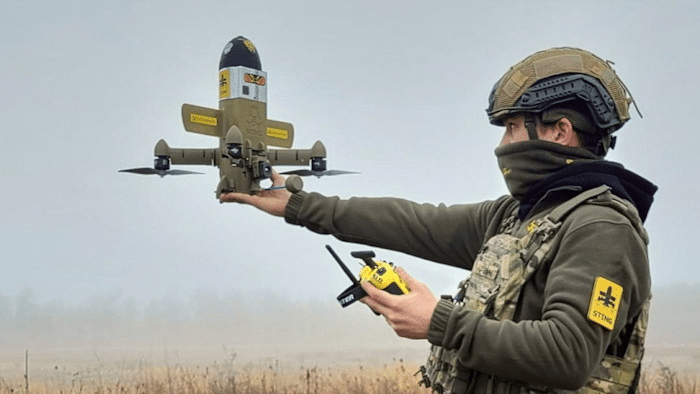
The Ukrainian experience shows that the drone is becoming as much an industrial munition as a conventional aircraft. The decisive advantage no longer lies only in technical sophistication. It lies in the ability to manufacture quickly, modify quickly and replace quickly. In practice, this shortens the sensor-to-strike cycle, increases battlefield adaptability and rewards industrial responsiveness as much as engineering performance.
Europe: rearmament, catch-up and industrial sovereignty
Europe retains a serious technological base supported by aerospace, electronics and naval industries. Yet it continues to suffer from fragmented procurement, overlapping national standards, slow-moving programmes and persistent dependence on some externally sourced components.
In response, the European Commission announced in April 2026 an investment of 1.07 billion euros across 57 defense projects, with explicit emphasis on drones, counter-drone systems, sensors and digital transformation.
According to Grand View Research, the European military drone market could reach 19.46 billion dollars by 2030.
The European capability question is now strategic rather than merely technical. The continent must support Ukraine, protect critical infrastructure, monitor maritime approaches and reduce technological dependence at the same time. The period from 2026 to 2030 may therefore determine whether Europe emerges as a competitive military drone actor or remains a market dependent on external suppliers.
United States: rebuilding mass for strategic competition with China
The United States has begun a notable doctrinal shift. After several decades dominated by extremely expensive crewed platforms, Washington is now trying to complement that model with large numbers of autonomous systems that are cheaper, scalable and replaceable.
The Department of Defense launched the Replicator initiative with the aim of fielding thousands of attributable autonomous systems on a compressed timeline. A recent United States budget proposal also included 53.6 billion dollars linked to drone technologies and associated logistics.

The strategic signal is clear. Washington sees the expansion of uncrewed systems as a way to preserve operational advantage in the Pacific, saturate a technologically advanced adversary and offset the cost of legacy high-end platforms. In that framework, the drone becomes a tool of intelligent mass rather than a boutique capability.
China and the Indo-Pacific: surveillance, saturation and coercive pressure
China places drones at the center of its military modernization. Across the Indo-Pacific, these systems serve not only reconnaissance functions but also demonstration, deterrence and strategic pressure.
In February 2026, large Chinese military drones reportedly flew over the South China Sea while emitting false transponder signals. In March 2026, older aircraft converted into drones were reportedly positioned at six air bases near the Taiwan Strait.
Taken together, these developments suggest a strategy that combines persistent surveillance, defensive saturation, electronic deception and preparation for high-intensity conflict. In this region, the drone is not simply a tactical force multiplier. It is increasingly an instrument of political coercion and operational shaping.
Taiwan and Japan: the asymmetric answer
Taiwan is accelerating its military adaptation. This month, its defence budget reached 3.32 percent of gross domestic product, up 22.9 percent. That increase reflects a clear intention to expand asymmetric capabilities able to complicate a Chinese operation.
Japan is following a complementary logic. Tokyo is increasing defense spending and reinforcing its posture around the south-western islands and surrounding maritime approaches. In that context, drones are particularly well suited to wide maritime spaces, long-endurance surveillance and distributed sensing.
The Middle East and the Red Sea: drones as tools of strategic disruption
Across the broader Middle East, drones have become low-cost instruments of area denial. They allow both state and non-state actors to generate strategic effects far beyond what their initial means would normally allow.
Since 2023, the Houthis have targeted more than 100 merchant vessels, causing loss of life and major logistical disruption.
The significance of this case extends well beyond the region. Drones now affect maritime insurance costs, trade routes, delivery timelines and naval escort requirements. They therefore have a direct effect on the global economy. The Red Sea has shown that a relatively inexpensive system can generate disruption on a global economic scale.
Turkey and Israel: new industrial centers of gravity
Turkey has emerged as a major actor through Baykar. The company announced 2.2 billion dollars in exports in 2025, with 88 percent of its revenue generated internationally.
Israel also retains a strong position thanks to the operational maturity of its systems, its industrial partnerships and its mastery of both sensors and embedded software.
The global market is therefore no longer shaped exclusively by long-established Western prime contractors. New industrial centers of gravity have clearly emerged.
Reusing existing platforms : when drone expansion also comes through conversion
Beyond entirely new programmes, several powers are also trying to accelerate uncrewed capability development by converting platforms already in service or otherwise available. This approach is attractive because it reduces some costs, shortens timelines and extracts additional value from equipment that has already been amortized.
In the air domain, the United States has converted older F-16 fighter aircraft into remotely operated QF-16 platforms for training and weapons testing. These aircraft retain the performance of the original fighter while becoming realistic targets or uncrewed vehicles.
In China, more than 200 older J-6 fighters are reported to have been converted into attack drones and deployed across six bases near the Taiwan Strait. The value of these platforms lies not in their modernity but in their numbers and their potential to saturate opposing defenses.

At sea, the United States Navy has stated that the Ghost Fleet Overlord programme involved converting large existing commercial vessels into autonomous surface ships. This approach makes it possible to test autonomous navigation, onboard system reliability and the future integration of uncrewed ships into the fleet more quickly than a fully clean-sheet programme would allow.
On land, the dominant trend is less about mass conversion of older armored vehicles than about designing vehicles that are uncrewed-ready from the outset. The United States XM30, intended to replace the Bradley, is presented as a platform able to operate with a crew or in remote mode depending on mission requirements.
The Ukrainian front also shows hybrid forms of reuse, with uncrewed ground vehicles serving as mobile launch platforms for other drones.
The global competition in drones is therefore not being fought only on new production lines. It also depends on the ability of states to turn existing platforms into rapid military advantage.
The real 2030 market: value is moving away from the platform
The economic center of gravity of the sector is gradually shifting. The airframe or ground vehicle will remain important, but in several segments it risks becoming commoditised. Future value is likely to concentrate in mission software, autonomy in jammed environments, elector-optical sensors, electronic warfare, specialized propulsion, counter-drone systems and the ability to produce rapidly at controlled cost.
In other words, the standalone drone will increasingly become an accessible product. The surrounding system architecture will make the real strategic and economic difference. The market is therefore moving toward software-defined capability rather than platform-defined advantage.
The expansion of uncrewed systems is no longer a future issue. It is already shaping contemporary warfare.
In Ukraine, it is industrializing attrition and accelerating tactical adaptation. In Europe, it raises the question of industrial sovereignty. In the United States, it forms part of the response to strategic competition with China. In the Indo-Pacific, it contributes to regional pressure and preparation for high-intensity contingencies. In the Middle East, it threatens global trade routes and demonstrates how relatively simple systems can produce disproportionate strategic effects.
By 2030, military power will depend less on the number of aircraft, tanks or ships alone than on the ability to produce, integrate, protect and neutralize drone fleets at scale.