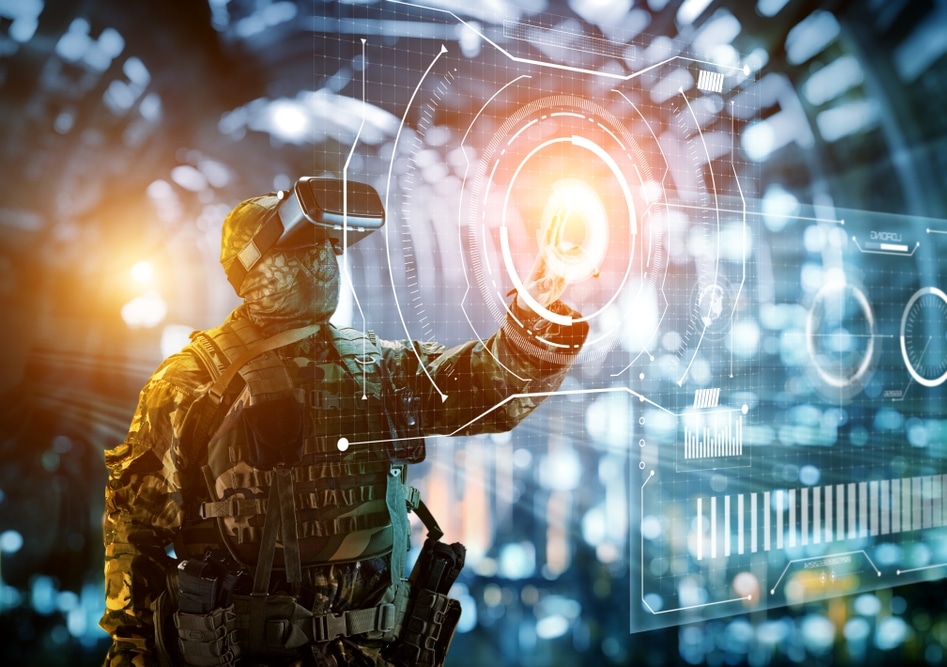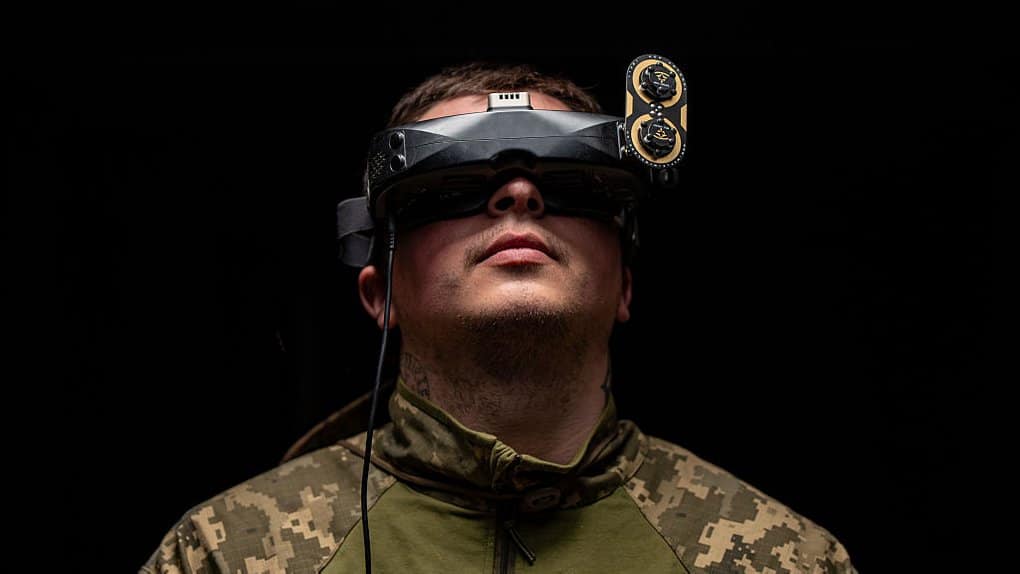



Armed forces are no longer acquiring platforms alone. They are now investing in digital capabilities that protect systems, exploit data and accelerate decision-making.
This shift is already reflected in NATO’s strategic direction. In July 2024, the Alliance revised its Artificial Intelligence Strategy to strengthen the governance, reliability and interoperability of artificial intelligence systems. In May 2025, it published its first Data Strategy, officially recognizing data as a strategic asset for collective defense. A few weeks earlier, it announced the acquisition of the Maven Smart System, developed by Palantir Technologies, to improve the exploitation of operational data by military headquarters. These decisions illustrate the same reality: military superiority now depends as much on mastering digital capabilities as on the performance of military platforms.
This evolution is also transforming the role of defense contractors. A fighter aircraft, frigate or armored vehicle will typically remain in service for 30 to 40 years. During that period, its software will be continuously updated to correct vulnerabilities, integrate new capabilities and adapt to an evolving threat environment. As a result, the relationship between an armed force and its supplier no longer ends with the delivery of a platform; it becomes a long-term partnership.
Cybersecurity becomes an operational requirement
The first consequence of digitalization is a significant expansion of the attack surface. According to the European Union Agency for Cyber security’s Securing Machine Learning Algorithms report, threats no longer target only networks or critical infrastructure. They also target training data, artificial intelligence models and development environments, creating new vulnerabilities for defense systems.
The war in Ukraine illustrates this evolution. Since 2022, military operations have been accompanied by cyber attacks targeting communications networks, energy infrastructure and government information systems. Cyber operations do not replace conventional combat; they seek to disrupt an adversary’s capabilities before or during military operations. This complementarity confirms that cybersecurity has become an essential component of operational readiness.
The threat is also evolving with artificial intelligence. The MITRE ATLAS knowledge base identifies dozens of attack techniques specifically targeting machine learning systems, including training data poisoning, model extraction, output manipulation and compromises throughout the development pipeline. These scenarios demonstrate that even a high-performing model can lose all operational value if its digital environment is not properly secured.
Cybersecurity is therefore no longer limited to preventing unauthorized access. It ensures data integrity, software availability and model reliability throughout the entire lifecycle of a system. Without digital trust, there can be no lasting operational superiority.
Data becomes a strategic asset
While cybersecurity protects systems, data has become the resource that powers military operations. Every mission generates information from radar systems, electro-optical sensors, electronic warfare systems, communications networks, logistics and maintenance activities. Some modern platforms generate several terabytes of data during a single mission. The challenge is therefore no longer collecting information, but exploiting it quickly enough to support decision-making.

This evolution is now recognized at the strategic level. In May 2025, NATO adopted its first Data Strategy. Its objective is to treat data as a shared strategic asset in order to improve information sharing, interoperability and operational planning across the Alliance’s 32 member states.
This transformation directly affects defense industry suppliers. Designing a radar, an unmanned system or a command-and-control system is no longer enough. Manufacturers must also ensure that the data generated by their systems can be properly structured, protected, shared and reused throughout the entire lifecycle of a defense program. Data architectures are therefore becoming a performance criterion in the same way as the technical characteristics of military equipment.
Data has now become the link between cybersecurity and artificial intelligence. Without trusted data, there can be no credible automation or effective decision support. Data has become an operational capability in the same way as the platforms that generate it.
Artificial intelligence becomes an operational capability
Artificial intelligence is no longer confined to research laboratories. It is gradually being integrated into defense programs to accelerate the analysis of large volumes of data, support military headquarters in decision-making and improve the employment of available capabilities.
The National Institute of Standards and Technology states in its Artificial Intelligence Risk Management Framework that an artificial intelligence system should not be evaluated solely on its performance. Its robustness, cybersecurity, governance, transparency and ability to operate in degraded environments are equally critical.
This approach is now widely shared. NATO’s revised Artificial Intelligence Strategy emphasizes that artificial intelligence systems must remain under appropriate human control, be interoperable across the Alliance and inspire a sufficient level of trust for operational use. The objective is not to replace the decision-maker, but to provide faster, more relevant and more actionable information.

Practical applications are already emerging. European company Helsing develops artificial intelligence solutions capable of fusing data from multiple sensors to improve tactical situational awareness. Its technologies are being progressively integrated into several European land, air and naval programs. In 2024, the company raised €600 million, one of the largest defense technology funding rounds in Europe, illustrating growing investor confidence in digital defense capabilities. The company is also preparing to raise an additional €1.2 billion.
Artificial intelligence is therefore not an independent pillar. It relies on data generated by military systems and depends directly on the quality of that data as well as the level of cybersecurity protecting it. Artificial intelligence is only truly effective when it is built on trusted data and a secure digital architecture.
Defense suppliers become strategic partners
This transformation explains why the role of defense suppliers is evolving rapidly. In the past, defense contractors primarily delivered platforms. Today, they also provide software, updates, data architectures, cybersecurity capabilities and artificial intelligence functions that will allow those platforms to evolve over several decades.
Established defense companies are already adapting their strategies. Thales is investing heavily in cybersecurity, digital architectures and artificial intelligence to enhance its defense portfolio. Leonardo is developing similar capabilities in data analytics and digital transformation. These companies no longer sell equipment alone; they now deliver integrated digital capabilities.
At the same time, a new generation of companies is gaining prominence in defense programs. Palantir Technologies specializes in the exploitation and fusion of operational data. Helsing focuses on artificial intelligence for military applications. Anduril Industries develops autonomous systems integrating software, sensors and automated data processing. Their common characteristic is that they create value primarily through software rather than the production of heavy military equipment.
This evolution is gradually changing defense procurement criteria. Ministries of Defense no longer evaluate only the performance of a platform. They also assess a supplier’s ability to maintain software, rapidly correct vulnerabilities, protect sensitive data and continuously upgrade systems throughout their operational lifetime.
As a result, suppliers are becoming strategic partners. Their value no longer depends solely on what they build, but on their ability to evolve, secure and sustain the entire digital ecosystem supporting military capabilities.
Cybersecurity, data and artificial intelligence are no longer separate domains. Together, they form a single value chain that determines the effectiveness of modern military capabilities.
Platforms will remain at the core of military forces. However, their performance will increasingly depend on the software, data and artificial intelligence models that support them throughout their operational lifecycle.
Defense companies must become strategic partners capable of mastering this digital value chain. They will no longer be simple equipment suppliers, but organizations whose expertise will directly contribute to the availability, resilience and continuous evolution of defense capabilities.