


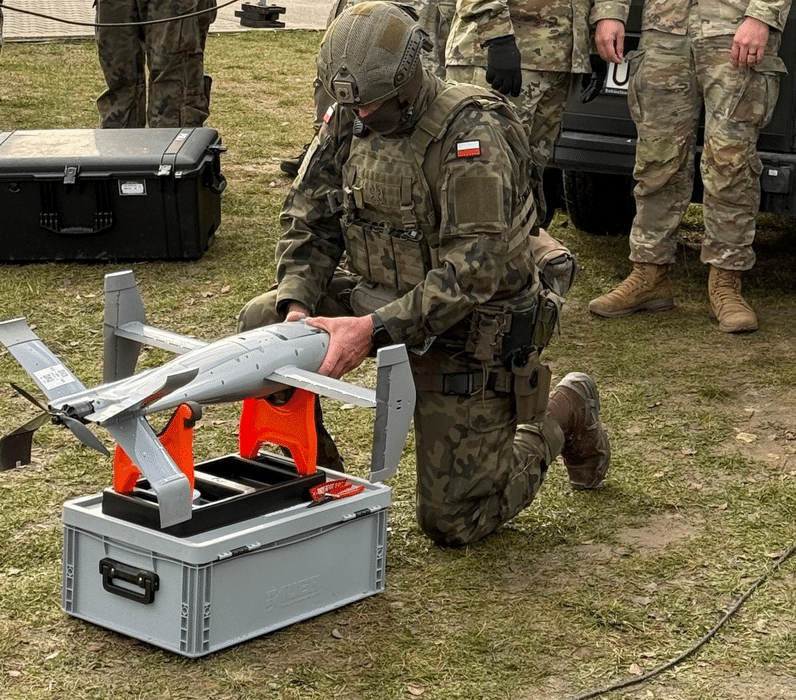
Poland and Romania are now fielding Merops, a compact AI counter-UAS system built to spot and kill low-cost drones, including FPV swarms, while staying on the move with frontline combined-arms units.
Designed as an agile layer between jammers and short-range air defenses (SHORAD/VSHORAD), Merops is fundamentally about driving down the cost per engagement. Instead of scrambling fighters or firing high-end missiles at quadcopters worth only a few thousand euros, the system aims to multiply small, local defense nodes that can be replicated quickly and keep working under pressure.
Close-in shield for cheap, mass threats
On NATO’s eastern flank, the pattern is now routine: low-altitude drones show up almost daily, saturating sensors and slowing decision-making.
That reality is pushing armies toward a light system that rides on a pickup truck, sets up close to the assets it protects, supply routes, vehicle parks, river crossings, and automatically pushes alerts to whatever effectors are in range: jammers, 30/35 mm guns with programmable ammunition, very-short-range missiles, or drone-on-drone interceptors. The intent is simple: free up high-end air-defense assets and cut the cost per kill through a short “sensors–C2–effects” loop.

Technically, Merops uses multi-sensor fusion – radar, EO/IR imagery and recognition algorithms – to pull slow, small signatures out of ground clutter. Software-driven autonomy sits at the core of the concept: in a contested electronic-warfare environment, when GNSS or data links degrade, the system is expected to keep tracking targets and sustain decision quality, avoiding false positives and limiting fratricide risk under the rules of engagement. The goal isn’t to solve the whole air-defense problem, but to own the “small and massive” slice that burns through ammunition stocks and complicates brigade-level operations.
The Ukrainian lesson, pushed down to brigade level
This approach reflects a hard lesson from Ukraine that NATO planners now largely a ccept: no single system can cope with multi-vector saturation. The answer is distributed attrition, Merops for low, proliferating threats; SHORAD for more complex profiles; C-RAM for ultra-fast projectiles; and jamming to thin out swarms before they reach their targets.
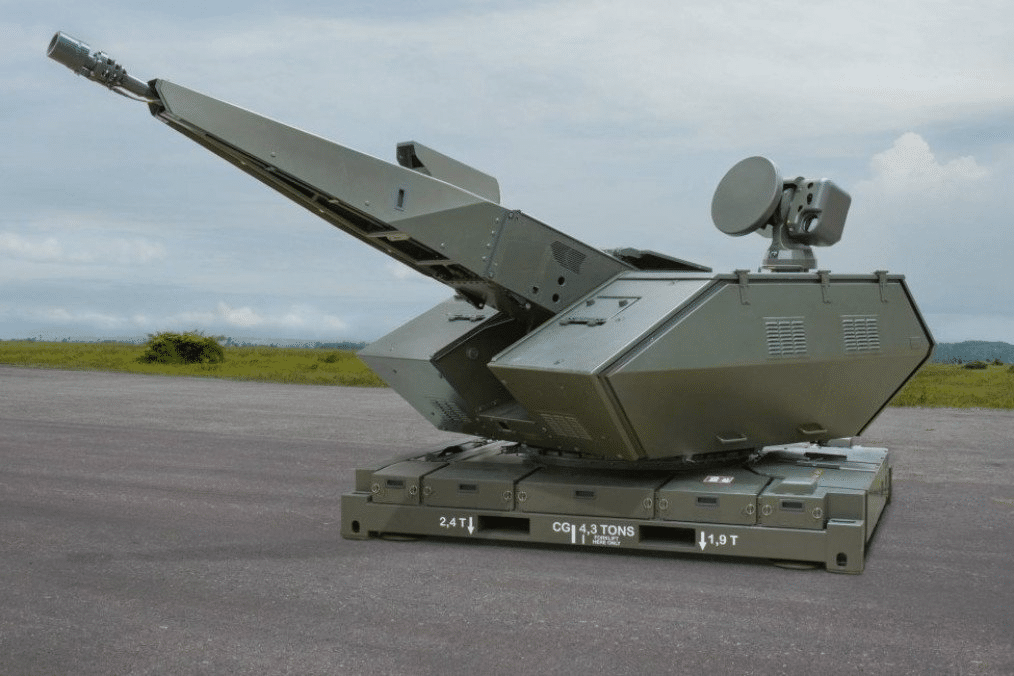
What remains uncertain is whether AI can keep delivering under active countermeasures, bird-like flight paths, analog relays, decoys, nap-of-the-earth routes, while still providing decision traces that commanders and legal advisers are willing to sign off on.
Operationally, Warsaw and Bucharest are looking for denser, more “always-on” coverage that can sit with units in day-to-day operations, without tying down full surface-to-air missile batteries for low-end threats. The economic logic is clear: stop wasting missiles on targets that can be disrupted, harassed, or intercepted at marginal cost. The doctrinal shift is just as important: push close-in air defense back down to brigade level, with C-UAS cells able to pull in organic effectors and share alerts with air-policing assets and infrastructure-protection forces.
Early phases will focus on training pipelines, crew proficiency, and inter-arm TTPs, so Merops can plug into existing C2 architectures with minimal friction.
The real test will come in the field: low-altitude detection rates, resilience to jamming, latency across the sensors-to-effects loop – and, above all, cost per neutralization over time. If the promised ratios hold, Merops could settle in as a standard building block for maneuver battalions and logistics groups in Northeast Europe, alongside tactical jammers and SHORAD sections. If not, planners will need to revisit the mix of mobile sensors, effectors, and alternative position, navigation and timing (alt-PNT) solutions needed to keep the cost advantage on their side of the ledger.