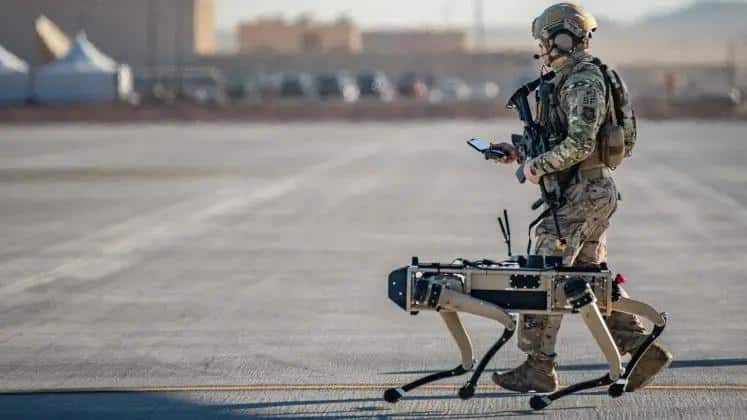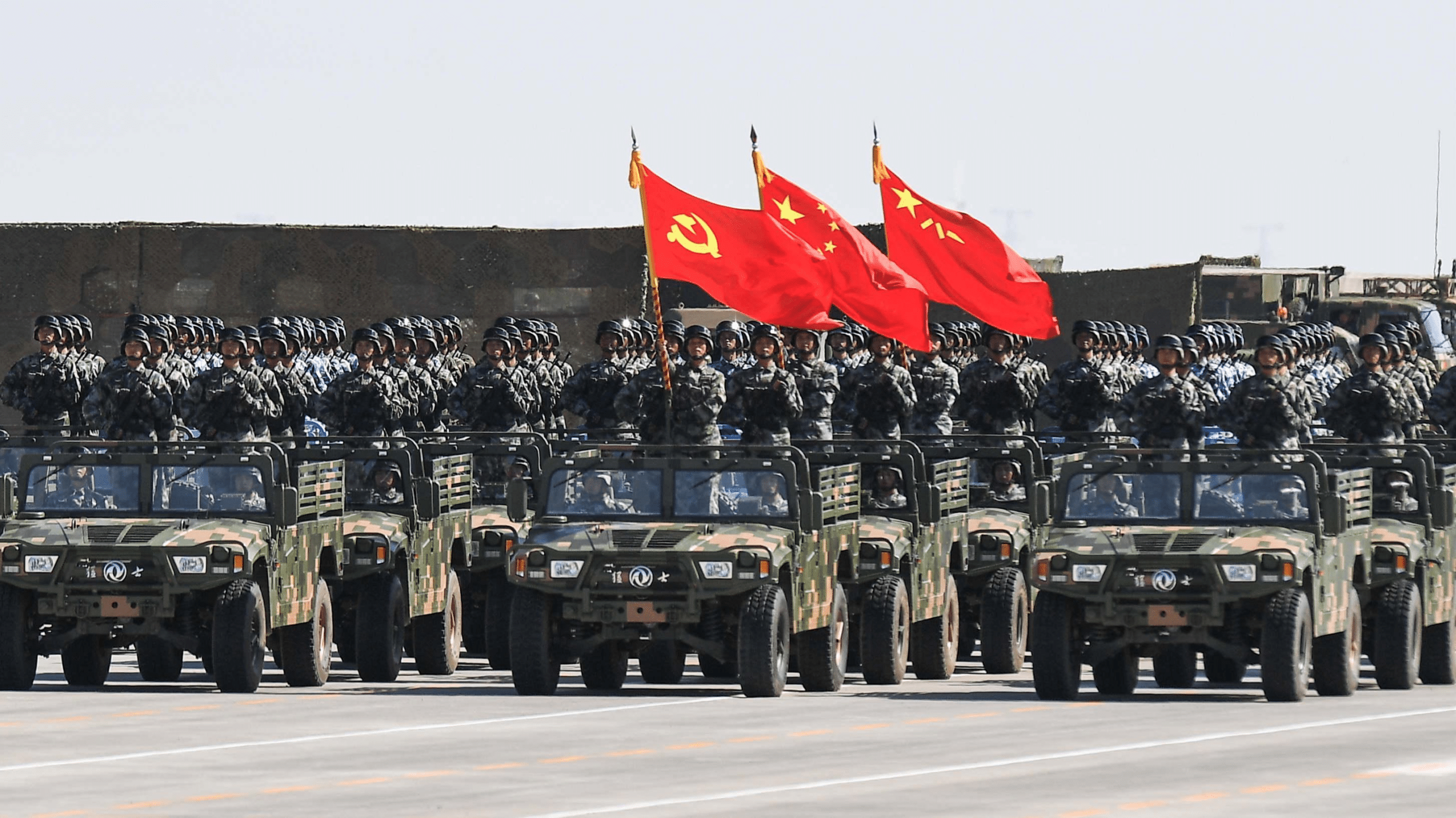



Naval debates have long illustrated the idea of the “cheap shot”: a relatively inexpensive means, used intelligently, can force a disproportionately costly response. On land, the concept is discussed less as a formula than as a reality. What can be described as imposed-cost warfare has become a fully developed operational grammar.
In Ukraine, the change is not limited to an increase in lethality. What has expanded is the cost attached to every decision. Advancing, resupplying, evacuating, transmitting, or concentrating forces now triggers chains of risk, because the battlefield has become saturated with sensors, expendable strike systems, and electromagnetic disruption capabilities. Analyses increasingly converge on a structural consequence: battlefield performance now depends on the ability to sustain operational tempo under attrition and multi-domain contestation, rather than solely on the excellence of a particular platform.
A battlefield that has become an accounting problem
One of the most significant transformations concerns the way war is effectively “counted”. Material attrition is no longer the only relevant indicator. Commanders must also account for invisible attrition: ammunition stocks, the wear of maintenance chains, the consumption of interceptors, fatigue among specialist teams, and the time lost securing supply routes or rebuilding a coherent tactical picture. A force may retain most of its armored vehicles and yet lose the initiative simply because it can no longer maneuver at the required tempo.

Within this context, the most profitable target is not always the most expensive object. Often it is the link that enables the entire system to function: a logistics node, a repair workshop, a communications relay, an engineering capability, an electromagnetic disruption asset, or a resupply routine. This logic appears with increasing clarity in operational feedback and analytical syntheses of the war in Ukraine. Striking the functions that regenerate and coordinate the force can produce more durable effects than the spectacular destruction of a single isolated platform.
Attacking the targeting process instead of the platform
The temptation to remain platform-centric nevertheless persists. Tanks, infantry fighting vehicles, and artillery systems are visible, symbolic, and measurable. Yet current conflicts demonstrate that a large part of the competition takes place in the struggle for observation, identification, transmission, coordination, and regeneration. The centrality of the targeting sequence that links detection to engagement, and its vulnerability under contested conditions, has become one of the key lessons highlighted by studies of the Ukrainian battlefield.

Neutralizing an optical sensor, interrupting a communication link, forcing a command post to relocate, or imposing stricter emission discipline can reduce lethality without necessarily producing visible destruction. Modern maneuver must therefore integrate methods that limit exposure, including dispersion, signature management, and deliberate risk management, precisely because the threat posed by sensors and fires is persistent.
This pressure is particularly visible at the tactical level. It can be observed in the systematic dispersion of units, in the increased caution governing movements, in the growing importance of decoys and false signatures, and in the adaptation of support routines. The implicit conclusion is difficult but increasingly evident: the more a military system depends on connectivity and structured routines, the more vulnerable it becomes to imposed-cost attacks that do not need to be spectacular in order to be effective.
Expendable strike systems have also accelerated the tactical cycle.
First-person-view drones and loitering munitions allow operators to multiply attempts at relatively low cost, exploit extremely short windows of opportunity, and learn rapidly through repeated engagement. The essential difference is not that a drone equals a tank in value, but that it enables a continuous series of attempts whose cumulative effect generates constant pressure.
This pressure forces the defender to devote time and resources to protection, concealment, relocation, jamming, and verification. Even when material losses remain limited, the operational consequence can be a loss of initiative. A force that can no longer concentrate without being detected, that cannot resupply without risk, or that must treat every movement as a survival operation eventually finds itself fighting at a tempo imposed by the opponent.
Research on the Ukrainian battlefield emphasizes precisely this dimension. Long-term sustainability depends on the ability to combine high-end systems with attritable capabilities and on the industrial capacity to sustain their consumption over time.
Counter-mobility remains a structural constraint
If drones represent the most visible feature of the conflict, counter-mobility represents its structural constraint. Mines, obstacles, destroyed routes, and denied areas transform maneuver into an engineering challenge, and engineering into a problem of tempo. A mine does not need to produce spectacular destruction in order to be decisive. It forces reconnaissance, requires engineering intervention, channels movement along predictable routes, slows formations, and mechanically increases vulnerability to fires.
The effects extend beyond the tactical level. Long-term contamination, the costs of demining, and the impact on reconstruction prolong the pressure well beyond the immediate fighting. Data and analysis documenting the global impact of landmines highlight the lasting influence of this factor both during conflict and in the post-war environment.
Electromagnetic Warfare: imposing cost without destruction
Electromagnetic warfare illustrates another dimension of the accounting logic that characterizes contemporary conflict. It is not always necessary to destroy an adversary’s systems in order to impose cost. Jamming signals, disrupting synchronization, degrading navigation, deceiving sensors, or interrupting the control link of a drone all generate operational friction.
These actions force the adversary to slow down, reinforce redundancies, adopt backup procedures, limit emissions, and ultimately reduce decision speed. When confidence in communications and navigation becomes intermittent, performance increasingly depends on training for degraded conditions and on organizational robustness as much as on sensor performance.
A method spreading beyond Ukraine
Even outside the specific density of the Ukrainian battlefield, contemporary tension zones show similar trends. Tactical drones available at relatively low cost, widespread use of decoys, opportunistic strikes against logistical support, and electromagnetic contestation are becoming common features.
The underlying logic is methodological. The objective is to multiply dilemmas for the defender, force protection of a broad system, compel the consumption of scarce resources, and ultimately impose a slower operational tempo. In that sense, imposed-cost warfare is less a particular type of conflict than a condition of entry into modern warfare.
The real center of gravity: system sustainability
For European land forces, the most useful conclusion is not simply that more of any specific capability is required. The reality is more demanding. Land superiority increasingly emerges from the resilience of a complete system capable of operating under attacking the targeting process instead of the platform sensor saturation, absorbing the attrition of expendable strike systems, protecting and regenerating its logistical networks, and maintaining coherent command under electromagnetic contestation.
Imposed-cost warfare therefore becomes both an industrial and organizational test. It rewards the ability to produce and integrate rapidly what is consumed rapidly, including drones, munitions, spare parts, sensors, and jamming systems, while preserving the most scarce capabilities for the moments when they can produce decisive operational effects.
High-end capabilities remain necessary, but they are no longer sufficient. What ultimately decides the outcome is the ability to sustain operational tempo when the adversary is not only attempting to destroy forces, but to make every action progressively more expensive than the previous one.