

From 2 to 10 November 2025, the active phase of Resolute Warrior 25 set the tempo in Latvia, as NATO ran a brigade-level exercise on the Eastern Flank. Long military convoys on public roads, combined-arms training on Camp Ādaži, manned and unmanned air activity overhead, for more than a week, the country moved to the rhythm of realistic, high-tempo training at the core of Allied deterrence.
Building a multinational brigade
The stated goal was straightforward: prove that a NATO multinational brigade can deploy, maneuver, disperse and sustain operations in depth, while coordinating closely with civilian authorities.
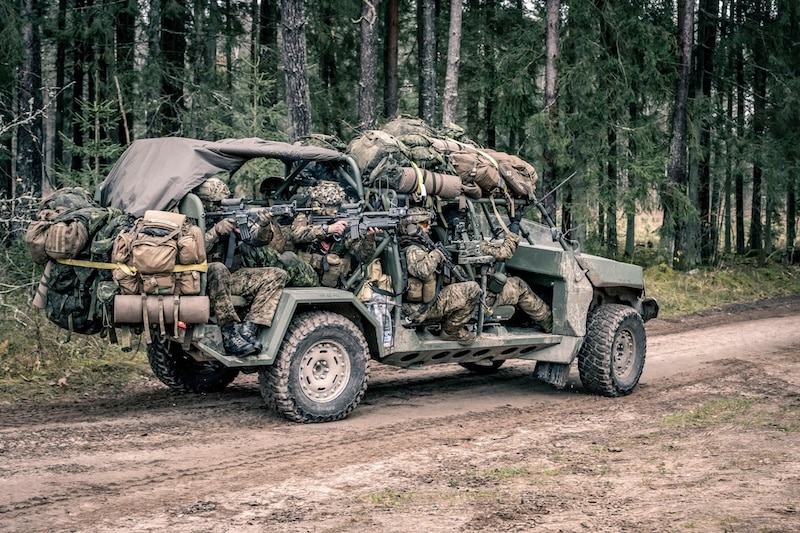
In practice, long road movements linked Daugavpils, Jēkabpils, Madona and the Sēlija region, with Camp Ādaži serving as the main hub for live-fire ranges, logistics and combined-arms maneuver. Authorities warned the public ahead of time about possible disruptions and framed the convoys with police and military escorts.
Canada acts as the framework nation for Multinational Brigade Latvia (MNB-LVA), which brings together contributions from more than a dozen Allies. After a first “full-brigade” milestone in 2024, the 2025 edition fits into a deliberate, step-by-step build-up of combat power and readiness.

The big change this year is Sweden’s participation. A mechanized battalion based near Ādaži is a visible symbol of Nordic-Baltic integration after Stockholm’s accession to NATO. On the ground, that additional unit reinforces the brigade’s armored component and its endurance.
What changes in 2025?
What sets Resolute Warrior 25 apart is not just the order of battle. It’s the way sensors, command-and-control and effectors are stitched together to speed up the sensor-to-shooter chain.

Organic drones at company and battalion level support reconnaissance, target acquisition, battle damage assessment and day-to-day situational awareness, including in wooded and urban terrain.
For the first time at this scale, the brigade trains its counter-UAS playbook as a system: radio-frequency detection, jamming and protection of convoys, logistics hubs and key nodes.
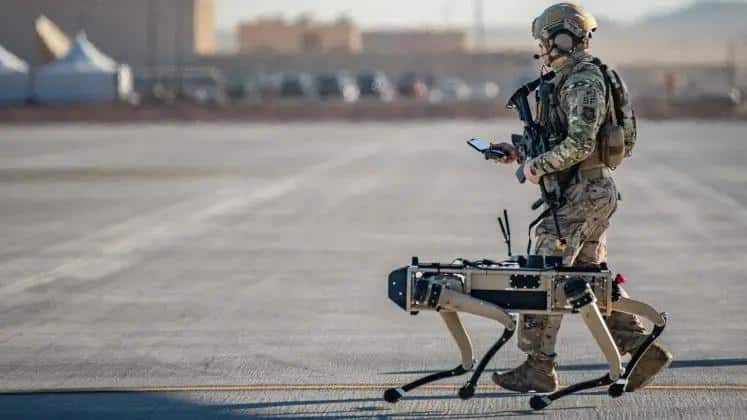
Software “bricks” for assisted analysis help fuse imagery and other feeds, prioritize alerts and push usable information down to platoon level. Light unmanned ground platforms are starting to appear in support roles – short-range recce, logistics mule, payload delivery – often paired with small UAS in combined UAS/UGV vignettes.
A shared digital map, common georeferencing and near-real-time reporting all work toward the same objective: cutting latency between detection and decision, and between decision and effect.
For Latvia: training and signaling
On the Latvian side, the exercise leaned heavily on clear public communication: timelines, transit routes, guidance for drivers, and regular updates. That transparency, combined with the visible presence of Allied units, serves a dual purpose: preparing the population for possible future activations and making NATO’s deterrence posture part of everyday life in the regions crossed.
Three takeaways stand out:
- Allied mobility under real conditions. Latvian road networks can absorb dispersed military traffic under civil-military control, with logistics sized for sustained operations rather than a short-term show of force.
- Credible multi-domain maneuver. The UAS + C2 + electronic-warfare triad accelerates the decision cycle in support of armor, artillery and mechanized infantry, rather than sitting on the sidelines as a niche enabler.
- Nordic-Baltic cohesion in practice. The Swedish contribution doesn’t just add vehicles and troops; it deepens standardization and thickens NATO’s posture along the Eastern Flank.
The broader Resolute Warrior 25 window ran from 15 October to 12 November, covering preparation, deployment and redeployment. The next step will be to turn observations into concrete changes: better dispersion schemes, stronger counter-mobility, more robust counter-drone coverage and hardened C2.
Looking ahead to 2026, the focus is already clear: further organic consolidation of the brigade, standardization of UAS/C-UAS/EW tactics, techniques and procedures – and new iterations on how far AI can push brigade-level command and control in a contested environment.