

For a long time, energy efficiency was treated as an environmental luxury secondary to the pursuit of firepower, mobility, or rate of fire. That paradigm is shifting. In an environment where logistics are contested, where every convoy becomes a target and every thermal emission an exploitable signature, saving energy becomes a tactical act.
This is what we can call operational eco-resilience: the ability to sustain military effect while reducing energy demand, logistical dependence, and the vulnerabilities that come with it. Between Sweden, Finland, the Baltic states, and Poland, the Baltic Sea region now concentrates this strategic paradox: interconnected power grids, pipelines, subsea cables, logistics bases, and vital maritime routes coexist with a persistent threat of jamming, interdiction, and sabotage. In this context, energy efficiency is no longer an environmental “nice to have” it is an operational survival factor.
Energy as a new tactical constraint
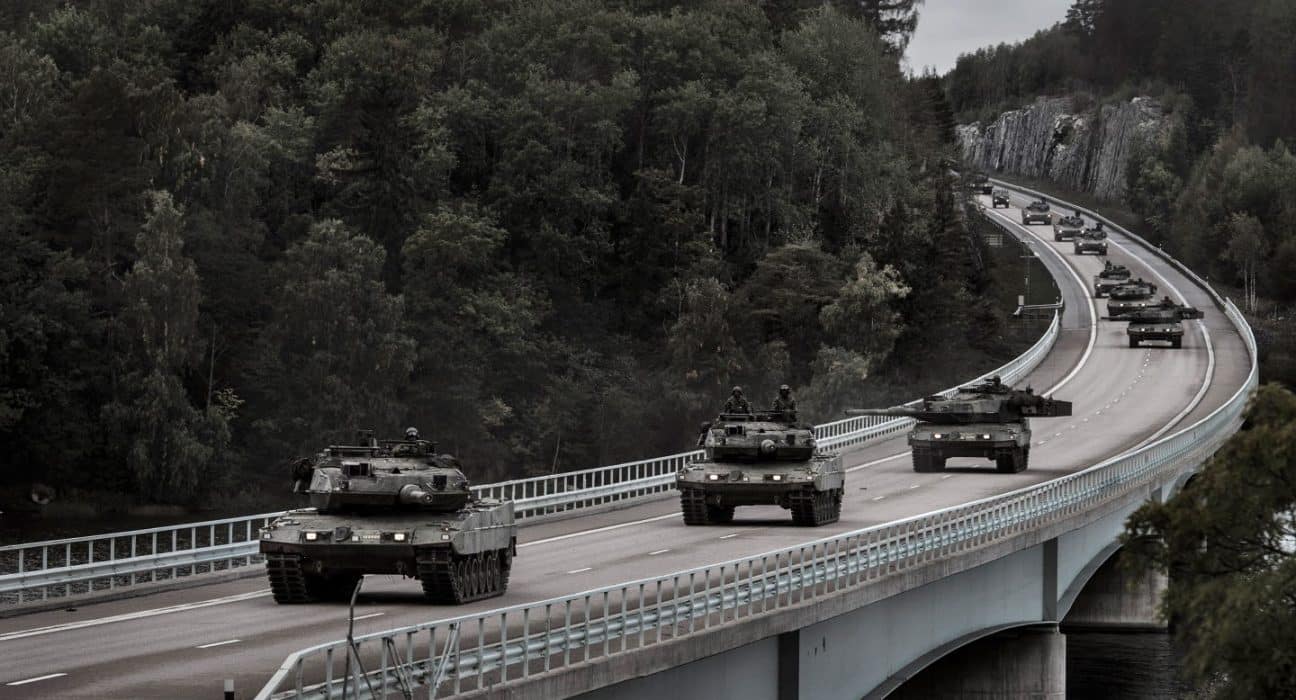
On NATO’s northeastern flank, vulnerability is no longer measured only by weapon range, but by the length of the supply chain. Every liter of fuel moved along potentially mined routes, every logistics run through a drone-covered area increases risk and cost. Cutting consumption therefore means cutting exposure.
It also improves discretion: less heat, less noise, fewer electromagnetic emissions. Energy signature becomes an integral part of stealth. In combat architectures that are increasingly distributed, connected, and autonomous, this kind of austerity is a decisive advantage.
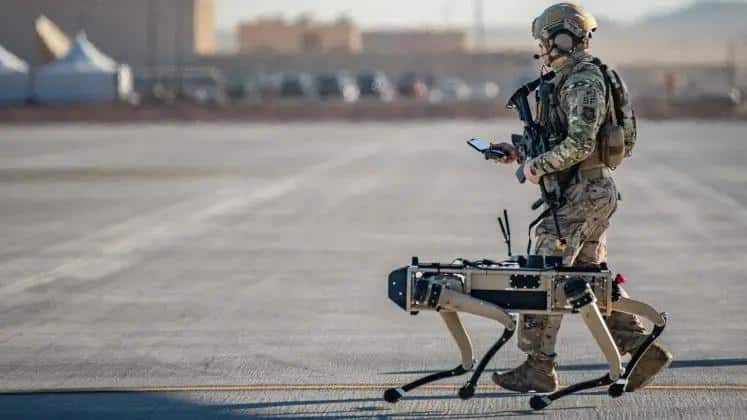
Sensor swarms, light platforms, and unmanned systems all demand efficient solutions that can operate for long periods with minimal logistical input. The northeastern flank is already an electromagnetically contested environment where every emission can be geolocated and every convoy tracked. Deployed forces therefore have to learn to “live lean”: reduce their signature, consume less, and last longer with partial autonomy.
During major exercises such as Aurora in Sweden or Northern Forest in Finland and through regional vigilance and forward-presence activities (including Baltic Sentry) the lessons learned are converging: the more supply chains stretch across hundreds of kilometers, the more vulnerable they become to strikes, drones, and electromagnetic interference. There is no single hard threshold carved in stone, but there is an operational reality: beyond a certain radius, every additional convoy shifts from support to fragility hence the need to bring energy production closer to the military effects being generated.
Microgrids, local energy, and C2 continuity
In response, several Nordic and Baltic allies are investing in tactical microgrids and local energy production. The goal is to sustain critical capabilities radars, command and control, communications, electronic warfare without relying on a constant fuel flow.
In the region, demonstrators already combine optimized generators, high-capacity batteries, and deployable solar solutions. The point is not to power an entire camp with renewables, but to ensure that vital nodes communications shelters, command posts, jamming stations can hold for several days if convoys are disrupted.

This approach is paired with heat storage and passive cooling solutions, inspired by Nordic civilian sectors, to maintain acceptable working conditions and system performance without excessive electrical draw. Energy resilience translates directly into command continuity: a command post that stays powered through an outage or jamming keeps the initiative.
We are still far from a generalized “eco-camp.” The transformation of Scandinavian and Baltic forward bases remains gradual and largely limited to pilot sites, under national initiatives, NATO “Smart Energy” projects, and European programs. But the trajectory is clear: every major new infrastructure project now integrates an energy and climate dimension from the design stage.
Eco-Logistics: every local watt is one less convoy
Logistics traditionally the most vulnerable link becomes the most promising experimentation space. Several European forces, including in the Baltic area, are exploring tactical 3D printing to produce some wear parts forward, reducing dependence on spare-part flows from the rear.

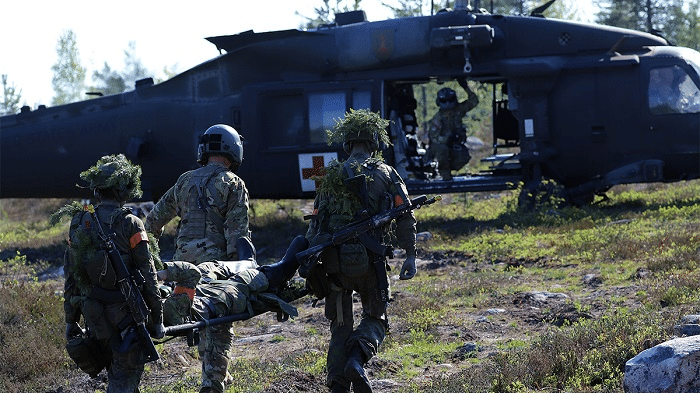
In parallel, modular containers that combine energy, water, and communications are being tested as “logistics blocks” capable of temporarily supporting a casualty collection point, a command post, or a radar site. Many of these solutions remain in the demonstrator or early adoption phase, but the objective is clear: decouple logistical maneuver from energy vulnerability.
Every watt saved or produced locally is one less truck on an exposed road. The equation also applies to the electromagnetic battlefield: in the Baltic, energy superiority comes with a radio-signature challenge. Using low-power mesh networks, adaptive protocols, and more restrained transmissions helps preserve the link without saturating the spectrum or presenting an obvious jamming target.
Combined with tighter consumption control, this radio frugality strengthens resilience against very active Russian electronic warfare especially around Kaliningrad and key friction points along the northeastern flank. Alternative navigation solutions (alt-PNT) tested in the region terrestrial radionavigation, alternative signals, hybrid approaches follow the same logic: do more with less, avoid dependence on a single vulnerable signal, and reduce the overall electromagnetic footprint of allied forces.
Energy austerity as the new stealth
Energy austerity is not just about logistics it directly affects platforms. In the Baltic and Nordic countries, hybrid or electrified reconnaissance vehicles can move for a few kilometers in silent mode with reduced thermal and acoustic signatures. This “low profile” mode is valuable in wooded, marshy, or snowy terrain, where noise and heat betray you faster than a high-visibility vest.
The same logic applies in the air domain: some high-efficiency ISR drones, optimized for endurance, can sustain persistent surveillance over a coastal area for long hours without heavy resupply convoys. Most electric tactical drones remain limited to a few hours of flight, but hybrid architectures and more refined energy management are already extending time on station.
In the Baltic, where weather often reduces visibility, silence and persistence frequently matter more than speed. A low-thermal-footprint drone that stays hard to spot in infrared and discreet in the radio spectrum can, in some situations, be more valuable than a faster but noisier platform that burns fuel and stands out. Gradually, this way of thinking discretion and energy cost per tactical effect is moving from the technical level to the doctrinal level. Platforms are no longer assessed only by range, payload, or speed, but by energy efficiency per mission accomplished. Operational plans now add an extra metric: the energy cost of a tactical effect.
Over the longer term, this eco-resilience will extend to the maritime domain. Regional navies are studying routes optimized for fuel consumption, radiated noise, and operational predictability, while hybrid surface drones promise continuous coastal watch at low energy cost. The same logic now feeds NATO work on tactical energy measurement and connector standards, to make microgrids and energy management interoperable across allies: several European states including the Netherlands, Germany, France, and Sweden—are contributing to common architectures to share, store, and manage energy the way forces already manage data and munitions.
Energy efficiency is thus becoming a quiet weapon—a force multiplier that combines three key effects: autonomy, discretion, and endurance. Every watt saved, every liter not hauled, every signature reduced strengthens stealth, tempo, and staying power.
Armed forces that embed this culture of energy efficiency into doctrine won’t just be making a gesture for the climate—they will gain a concrete operational advantage in tomorrow’s contested environments. In the Baltic and beyond, energy superiority is becoming a new form of tactical superiority.