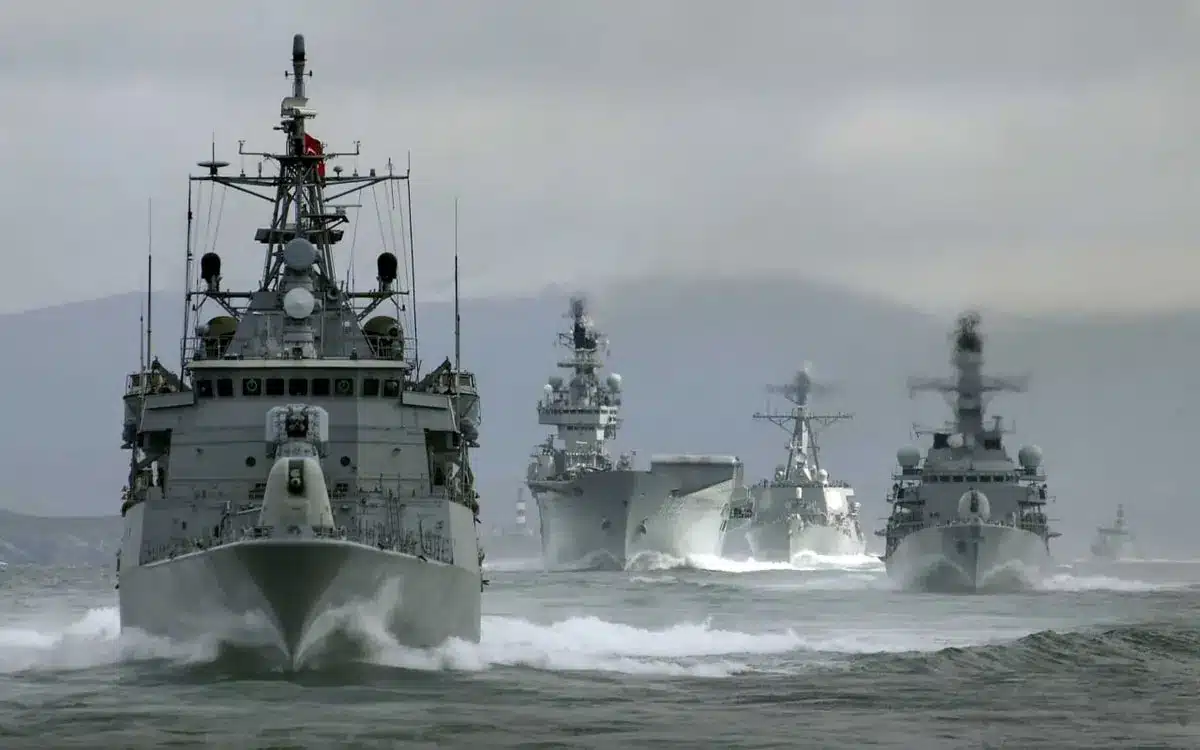



The future Luleå class is not merely a naval modernization effort. It represents the most structurally significant surface combatant program for the Swedish Navy in decades. The Swedish Defence Materiel Administration is targeting a contract signature in the first half of 2026, following a market evaluation phase throughout 2025.
Sweden plans to acquire four frigates described as the largest surface combatants in its navy, with first deliveries targeted from 2030 onward.
That timeline, combined with an ambition to integrate technically mature and preferably proven systems, places industrial architecture at the center of the decision. Yet the issue extends beyond the selection of a platform. It involves aligning strategic ambition, national industrial capacity and execution credibility.
A strategic requirement reframed by NATO membership
The original requirement is rooted in a transformed strategic environment. Sweden’s accession to NATO on March 7, 2024 entails a stronger contribution to allied defense planning, particularly in the Baltic region.
Public statements indicate that the future frigates are expected to emphasize endurance, air defense capability and enhanced integration within allied operational frameworks.
This marks a clear capability shift. The Luleå class does not simply replace hulls; it alters scale and posture. It implies expanded air defense capacity, improved autonomy for sustained operations, deeper interoperability and enhanced resilience against hybrid threats in the Baltic Sea.
That strategic requirement, combined with elevated operational ambition, explains the industrial tension surrounding the program.
An industrial decision under time pressure
The Swedish Defence Materiel Administration has formally launched a market analysis and evaluation phase with the explicit objective of concluding a contract in the first half of 2026.
In parallel, the Swedish government has stated its intention to achieve first deliveries beginning in 2030.
This combination creates a structural constraint: limiting development risk by relying on existing or derivative platforms rather than launching a fully new design.
As a result, the competitive landscape has widened. The central question is no longer solely technological; it is industrial.
European competition: contrasting industrial models
Public reporting identifies Naval Group, Navantia and Babcock, in cooperation with Saab, among the contenders.
Navantia and the life-cycle approach

Navantia has presented in Sweden its experience in design, construction and through-life support of modern frigates, linking this communication to a delivery proposal conditional upon contractual arrangements.
The company indicated the possibility of delivering two ships with trained crews by 2030, followed by two additional vessels in 2031, subject to contractual agreement.
The emphasis lies not only on the platform but on program governance and life-cycle support integration.
Naval Group and the Defence and Intervention Frigate
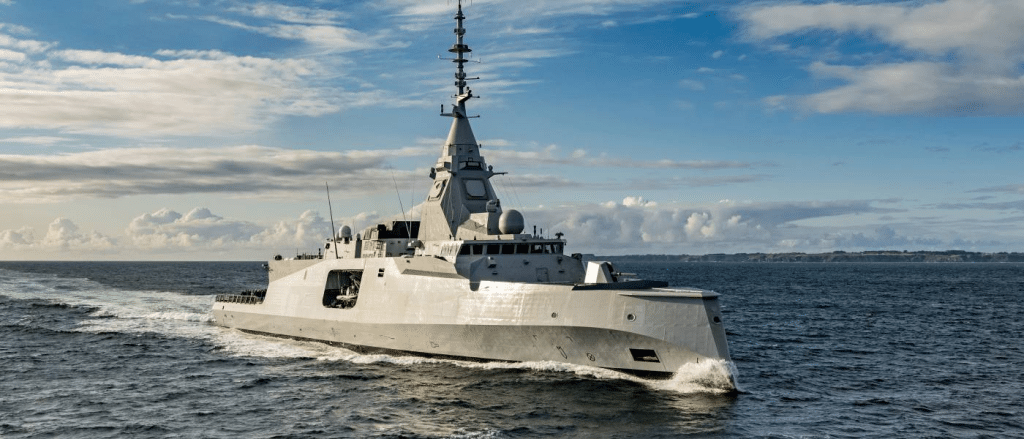
Naval Group structures its offer around the Defence and Intervention Frigate, a program currently in production for the French Navy.
The company highlights a stabilized production chain and a local cooperation framework in Sweden through a strategic partnership with the Swedish shipyard Oresund Drydocks, intended to reinforce industrial anchoring.
The underlying argument is straightforward: industrial maturity can reduce schedule risk.
Saab’s pivotal role

Saab’s role extends beyond that of a conventional industrial partner. In May 2024, the company announced cooperation with Babcock regarding Sweden’s future surface combatants, positioning itself as prime contractor for the program.
This configuration places Saab at the center of the envisioned industrial architecture: overseeing system integration, coordinating critical interfaces and structuring long-term support. The 2026 decision therefore concerns not only the selected platform, but the industrial governance framework that will follow.
2030: Industrial Credibility Under Strategic Pressure
The 2030 objective should be understood as a coherence test between strategic ambition and industrial architecture.
The Luleå class stands at the intersection of three structural dynamics:
- the strategic transformation of the Baltic Sea,
- Sweden’s consolidation within NATO,
- the redefinition of industrial sovereignty in an interconnected European environment.
The first tension concerns operational integration. The future frigates must integrate into complex allied networks while retaining national specificities. Adapting an existing platform to these requirements may entail significant software and hardware modifications. Integration is not a secondary technical matter; it determines coalition effectiveness.
The second tension involves initial availability. In a deteriorating security context, a delivered but logistically constrained vessel represents strategic vulnerability. The robustness of the support chain becomes an indirect element of deterrence.
The third tension is political. The industrial choice will signal the depth of European naval cooperation and the priority assigned to the national industrial base.
With a projected service life of approximately 40 years, the 2026 decision will shape Sweden’s naval posture for decades.