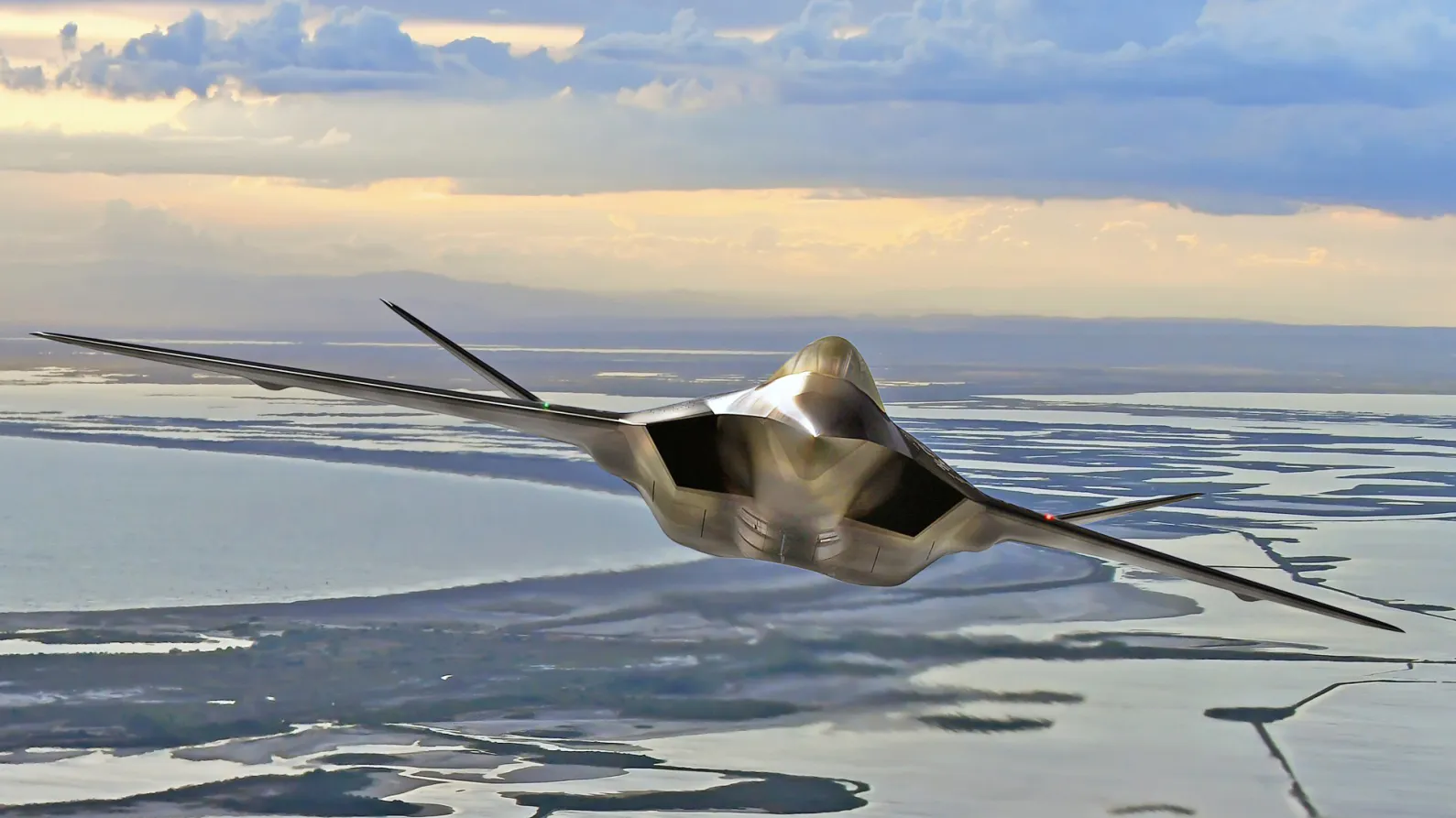


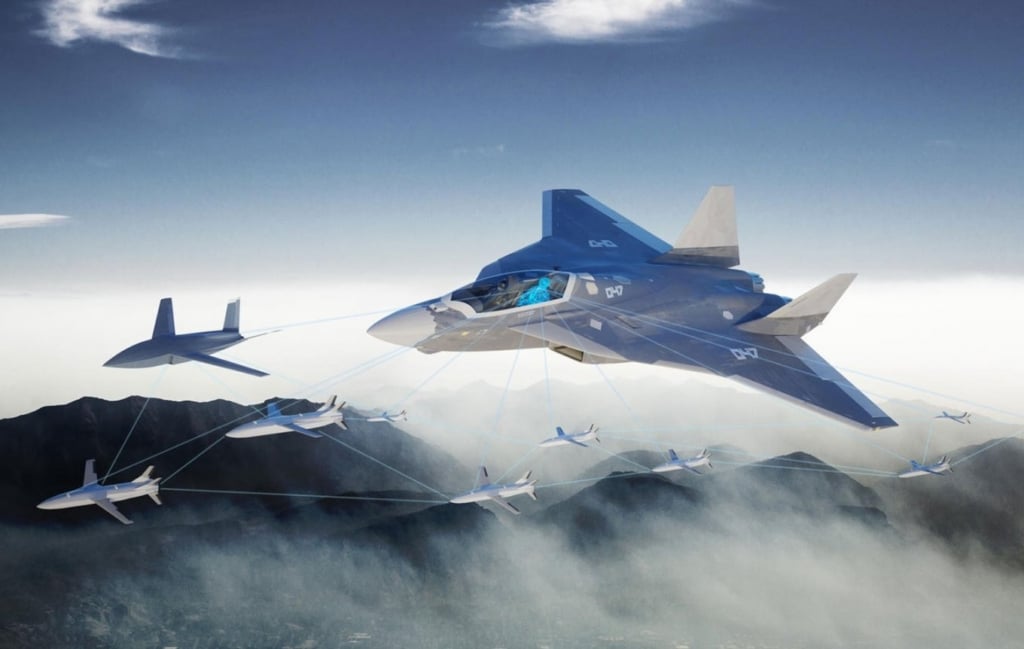
The Netherlands’ recent engagement with the U.S. Collaborative Combat Aircraft initiative reflects more than an interest in a new generation of uncrewed combat platforms. It also highlights a deeper shift in how Western air forces are approaching manned–unmanned teaming, and exposes a growing divergence inside Europe over how the next generation of combat air power should be built.
While the United States is moving quickly to field collaborative aircraft that augment existing fighter fleets, Europe’s flagship program, the Future Combat Air System, remains slowed by industrial disputes and strategic differences among its partners. Increasingly, analysts and officials suggest that the real area of sustainable cooperation may not be the aircraft itself, but the digital architecture that connects future combat systems.
Diverging strategic expectations in Europe
Behind the industrial tensions that periodically slow negotiations around the Future Combat Air System lies a deeper issue: France, Germany, and Spain do not necessarily expect the same aircraft from the program.
For France, the future fighter is intended to replace the Rafale and must therefore be capable of covering the full spectrum of French strategic missions, including long-range power projection and airborne nuclear deterrence. These requirements directly shape expectations in terms of range, payload capacity, survivability, and operational autonomy.

Germany’s priorities appear somewhat different. Berlin increasingly emphasizes integration within the Alliance’s operational architecture and interoperability with systems already in service, particularly the F-35. Germany’s acquisition of that aircraft for nuclear-sharing missions has also reduced the urgency of certain capabilities initially envisioned for the future European fighter.

Spain’s position, meanwhile, reflects a combination of political continuity and industrial anchoring. Madrid has publicly reaffirmed its commitment to the program while ruling out the option of purchasing the Lockheed Martin F-35 Lightning II, instead favoring a European equipment pathway. At the same time, Spain has a structural interest in preserving the program components where it holds the strongest industrial role. The Indra group acts as national coordinator, leads the sensors pillar, and holds responsibility for the combat cloud pillar at the national level. This positioning makes cooperation around the digital architecture politically easier to sustain than full convergence on the aircraft itself.
In this context, the question is no longer limited to industrial workshare. The recent escalation between Dassault and Airbus also illustrates the risk that diverging operational requirements and governance disputes could ultimately push partners to prioritize the program’s network architecture rather than full alignment on the aircraft platform.
The structural risk of a “system-of-systems” program
The Future Combat Air System was conceived as a tightly integrated “system of systems,” built around several interconnected pillars: the New Generation Fighter, remote carriers, and a digital combat cloud linking aircraft, sensors, and effectors.
This architecture promises major operational advantages. By integrating multiple layers of sensing, data sharing, and distributed combat assets, the system aims to deliver a networked approach to air warfare suited to highly contested environments.
Yet this level of integration also introduces structural risk.
When a program combines technological ambition, industrial balance, and political compromise inside a single framework, friction in one area can slow progress across the entire architecture. Disagreements over intellectual property, industrial leadership, or technical responsibilities can delay multiple components simultaneously.
By contrast, the American approach to collaborative combat aircraft has been deliberately incremental. Instead of waiting for a fully integrated sixth-generation fighter ecosystem, the United States Air Force is introducing uncrewed teammates that can operate alongside existing fighters such as the F-35, allowing operational concepts and software architectures to evolve through iterative testing.
This difference in development philosophy may prove decisive over the coming decade.
A possible exit path: cooperate on the network, not the aircraft
Against this backdrop, some discussions within European defense and policy circles have explored a potential compromise: maintaining cooperation on the digital backbone of the program, the so-called combat cloud, while allowing greater national flexibility on the aircraft itself.
The combat cloud is the data architecture designed to connect sensors, aircraft, drones, and command systems across the battlespace. In practice, it would enable real-time sharing of targeting data, mission coordination between crewed and uncrewed systems, and distributed decision-making across multiple platforms.
Unlike the aircraft platform, the combat cloud does not require partners to agree on a single set of aerodynamic, propulsion, or payload specifications. It focuses instead on software standards, communication protocols, and data integration.
From both an operational and industrial standpoint, this component may ultimately prove easier to share than the aircraft itself.
Such an arrangement would allow partners to continue developing common digital infrastructure while preserving national freedom in the design of future fighters.
Why the combat cloud may become the real strategic prize
If this shift occurs, it would reflect a broader transformation in the foundations of air power.
First, software architecture is becoming a critical strategic dependency. The system that controls data flows, mission management, and human–machine interaction will increasingly shape how aircraft, drones, and sensors operate together.
Second, a combat cloud can connect existing fleets as well as future systems. It could link aircraft such as the F-35, Eurofighter, and Gripen with collaborative drones, surveillance assets, and ground-based command systems, creating operational networks without waiting for the arrival of a new fighter generation.

Third, control of digital architecture carries significant industrial implications. The entity that defines standards, interfaces, and data protocols effectively determines how new sensors, drones, and effectors can be integrated into the broader ecosystem.
In that sense, the competition around next-generation air power may increasingly revolve around software frameworks rather than airframes.
What the Dutch move may really signal
Seen from this perspective, the Netherlands’ decision to engage with the Collaborative Combat Aircraft ecosystem takes on a broader meaning.
By participating early in the development of manned–unmanned teaming architectures associated with the F-35, Dutch defense planners may be seeking not just access to a particular drone platform, but insight into the operational and software standards that will define collaborative combat aviation.
If the U.S. program succeeds in fielding operational loyal wingman systems before the end of the decade, allied F-35 operators may gain their first practical experience with collaborative air combat through that pathway.
For European air forces, the challenge will be ensuring that these emerging architectures remain interoperable with future European systems.
In that sense, the most consequential competition in the next generation of air combat may not be between aircraft designs, but between the digital ecosystems that connect them.