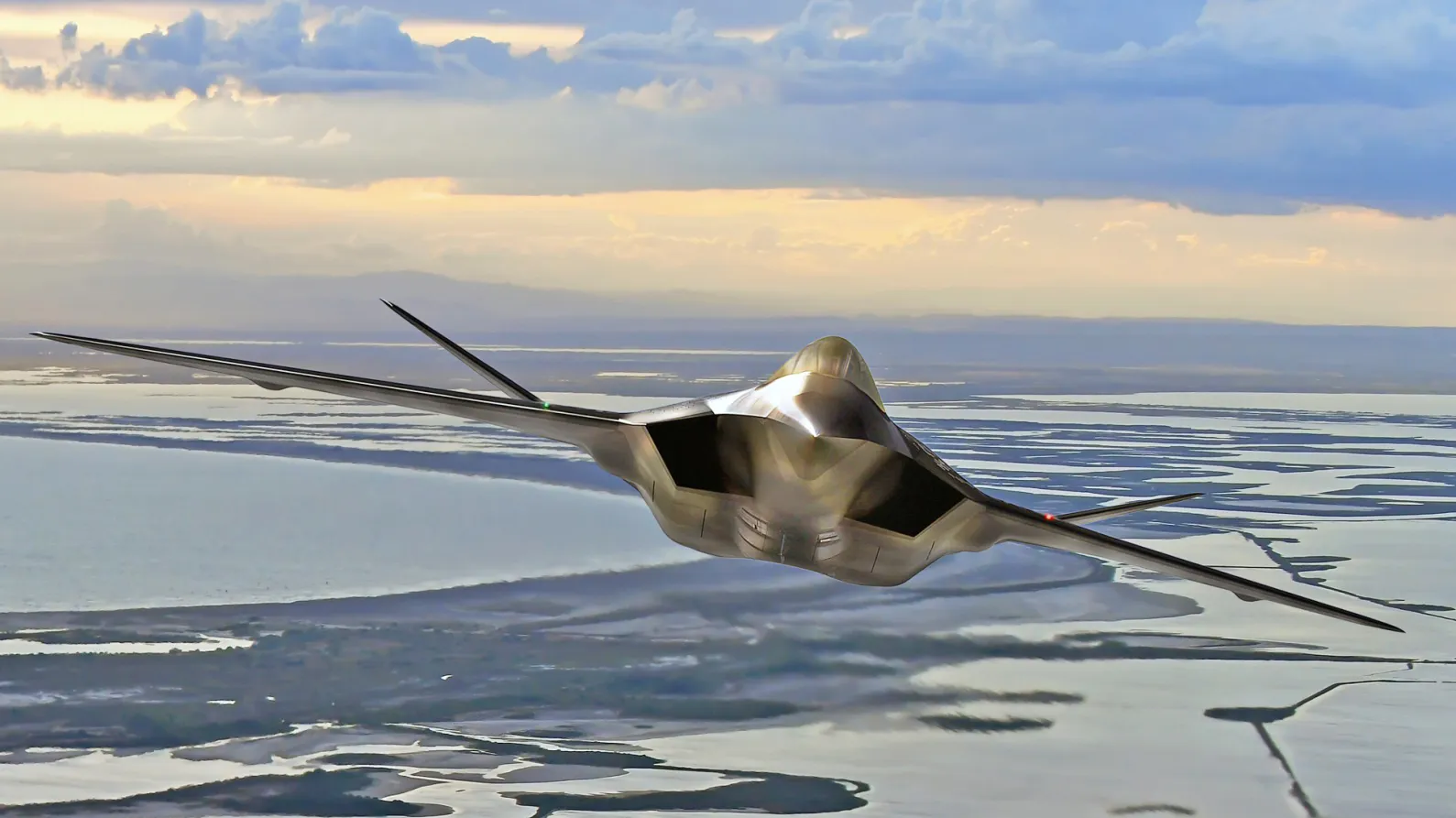
Ukraine was beginning to solve one of the hardest problems posed by Russia’s Shahed campaign: how to shoot down cheap attack drones without burning through far more expensive air-defense weapons. Now Russia is changing the target.
New jet-powered variants can exceed 400 kilometers per hour, with some observed flying between 4 and 7 kilometers above the ground. The Ukrainian Air Force estimates that roughly 60 percent are intercepted, compared with about 90 percent of slower variants. Those are Ukrainian wartime figures, not independently verified performance data. But they point to a new problem for defenders: the low-cost interception model developed against earlier Shaheds is being tested by a faster, higher-flying threat.
The question is no longer simply whether inexpensive interceptors can destroy Shaheds. It is whether they can remain inexpensive as the Shahed becomes harder to catch.
That question matters well beyond Ukraine. Europe is investing in defenses against mass drone attacks just as the threat those systems are designed to defeat is beginning to change.
Jet-Powered Shaheds are shrinking the engagement window
Counter-drone defense depends on layers: detection and classification first, followed by electronic warfare, guns, missiles and, increasingly, interceptor drones. As Defense Innovation Review previously examined in its analysis of counter-drone architecture, the goal is partly economic. Cheaper defenses should handle threats they can defeat, preserving scarce and expensive weapons for targets that require them.
Russia’s Geran-4 is testing the boundaries of that model. According to specifications released by Ukrainian military intelligence, the aircraft can reach 500 kilometers per hour and an altitude of 5,000 meters. Its airframe has been reinforced and adapted for turbojet propulsion.
The changes are already moving beyond the engine. Ukrainian intelligence says newer variants incorporate optical navigation based on reference imagery, an improved inertial navigation system and new warheads. Some of those features have yet to be independently confirmed. Taken together, however, the reported changes point to a threat that is still evolving.
For the defender, speed changes more than the chase.
A faster drone crosses an interceptor’s engagement zone more quickly. Higher altitude can further narrow the options available to systems designed around slower Shaheds. The result is a shorter window to detect the target, establish its track, select a weapon and make the intercept.
Ukraine is already trying to stretch that window. On September 15, 2026, Volodymyr Zelenskyy announced a successful experimental engagement against a jet-powered Shahed while acknowledging that the interceptor still required improvement. Ukrainian companies are also developing turbojet-powered interceptors, including one advertised as capable of reaching 450 kilometers per hour with automated target acquisition.
That shows the concept is technically possible. Turning it into a military capability is harder. Interceptors must be produced in volume, maintained, connected to sensors and supported by trained personnel. Stocks also have to be replenished as aircraft are expended.
The challenge is therefore not simply to build something fast enough to catch a Geran-4. It is to do so at a cost and scale that preserve the reason for using interceptor drones in the first place.
Speed is only part of the race
There is another way to deal with a faster target: find it sooner. An interceptor does not necessarily have to chase down a Shahed if the target is detected early, its track is reliable and the interceptor can be positioned ahead of it. Early warning creates favorable engagement geometry. Late warning turns the same intercept into a pursuit, where speed matters far more.

That makes sticker price a poor measure of interception cost. What matters is how much the defender must spend to achieve an acceptable probability of destroying the target. Warning time, detection range, available stocks and the value of the asset being protected all shape that calculation.
The Middle East offers a different view of the same problem.
During the direct confrontation with Iran in 2025, Israel combined ground-based defenses with combat aircraft while also striking military infrastructure and missile- and drone-related capabilities inside Iran. Whatever the precise interception rates claimed by Israel, the operational logic is broader: a threat engaged far from its target, or disrupted before launch, places less pressure on terminal defenses.
Jordan shows what that additional depth can mean in practice. Its location puts the country beneath some flight paths between Iran and Israel. In 2026, Jordanian forces repeatedly intercepted Iranian drones and missiles entering Jordanian airspace or targeting Jordanian territory.
Geography does not guarantee an intercept. But it can buy time. A drone detected and engaged hundreds of kilometers from its ultimate target gives defenders options that may no longer exist during the final minutes of flight.
The September 14, 2019 attack on the Saudi oil facilities at Abqaiq and Khurais illustrates the opposite problem. A United Nations investigation established that at least 18 drones and seven cruise missiles were used. A low-flying threat approaching from a poorly covered direction can compress the defensive timeline, leaving far less time to detect, classify and engage it.

The common variable is time. Attackers can take it away through speed, low-altitude flight, unexpected routes and saturation. Defenders can win it back through earlier detection, faster data sharing, forward interception and automation.
That also changes the economics. A relatively simple interceptor may be enough when early warning allows it to meet the target on favorable terms. Detect the same threat too late, and the defender may need a faster, more capable, and more expensive weapon.
The race against the jet-powered Shahed is therefore not just about building a faster interceptor. It is about preventing speed from forcing every engagement toward the expensive end of the defensive arsenal.
Europe needs adaptability more than a perfect interceptor
That may be the most important lesson for Europe. The immediate temptation is to answer a faster Shahed with a faster interceptor. But an interceptor designed around today’s Geran-4 could face a different target by the time it is produced and fielded at scale.
The threat is already moving. The Geran-4 has evolved in propulsion, airframe and performance, while Ukrainian reporting points to further changes in navigation and warheads. Ukraine is adapting its interceptors in parallel.
For European armed forces, choosing a single design today and expecting it to remain unchanged for a decade risks fielding an answer to yesterday’s threat.
A more durable approach would make the wider defensive architecture easier to change. New sensors, software, guidance methods and interceptors would need to be integrated without rebuilding the entire system around each new threat.
A Dutch project tested in Ukraine is pursuing that idea. It connects different radars, sensors and interception systems through an adaptable software layer intended to shorten the path from detection to decision while allowing new equipment to be added.
The contest is now running on two clocks. One counts the seconds available to detect, track and intercept an incoming drone. The other counts the months needed to modify an interceptor, put its successor into production and field it in meaningful numbers.
Europe will have to compete on both. The most important capability may therefore not be any single interceptor now entering service. It may be the ability to replace it quickly when the next Shahed makes it obsolete.