


For years, Europe lived with a comfortable assumption: satellite navigation was like electricity, always there, largely invisible, and taken for granted. Open an app, an aircraft stays on profile, a ship threads a channel, a telecom network stays in sync, a financial transaction is timestamped everything just works.
Since 2024 – 2025, that assumption has eroded. GNSS, the umbrella term for satellite navigation that includes GPS and Europe’s Galileo, is no longer background infrastructure. It has become a quietly contested domain. And when it degrades, it’s not just your phone’s map that wobbles: whole segments of the economy and public safety are forced back onto “old-school” navigation and timing practices.
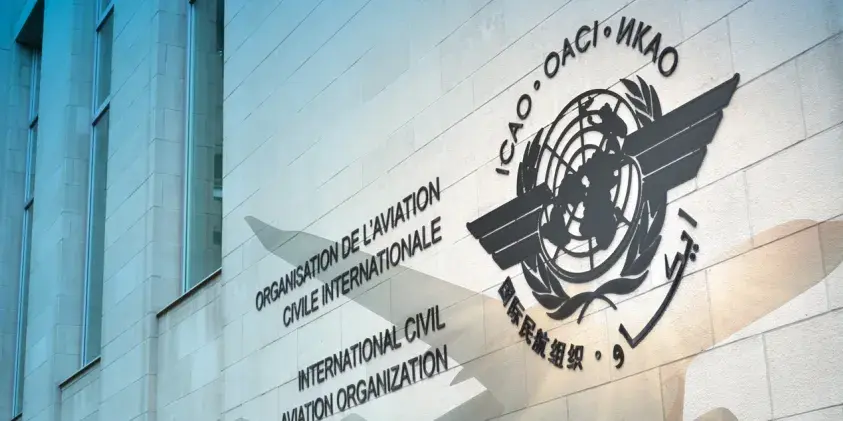
The issue has even crossed a diplomatic threshold. In 2025, the International Civil Aviation Organization (ICAO) formally condemned state-origin GNSS radio-frequency interference as a threat to aviation safety. When global civil aviation bodies elevate an issue to that level, it’s a sign the problem is no longer episodic, it’s structural.
Europe’s pivot: from “satellites-only” to layered resilience
To understand what’s at stake, keep three concepts in mind:
- Jamming: flooding the band with noise so the receiver can’t hear the signal.
- Spoofing: generating a believable false signal to “move” position, or time.
- Sustained disruption: when interference becomes routine, you’re no longer managing isolated incidents; you’re operating in a degraded environment.
That is exactly what is changing the calculus in Northern Europe and the Baltic region: entire areas now live with the prospect that satellite navigation may be intermittent, unreliable, or unavailable.
Europe is therefore relearning a classic security rule: don’t depend on a single point of failure. The key term is C-PNT (Complementary Positioning, Navigation, and Timing), achieving trustworthy position, navigation, and time not through a miracle technology, but through a stack of reinforcing layers. (And “time” matters as much as position: telecommunications, energy grids, and financial systems rely on tight synchronization.)
At the EU level, the European Commission and the Joint Research Centre (JRC) are pushing a multi-layer concept and the notion of a “timing backbone”, a resilient time-distribution spine designed to keep time-dependent services running even when GNSS performance is degraded.
In that architecture, Galileo remains central, but it is no longer “the whole solution.” It is one critical layer among several.

A major 2025 milestone was the introduction of OSNMA (Open Service Navigation Message Authentication), declared operational on 24 July 2025. By authenticating Galileo navigation messages, OSNMA strengthens confidence in the signal and reduces exposure to certain forms of deception. But it does not prevent jamming, and it does not make spoofing impossible in all cases. OSNMA hardens the GNSS layer, it does not replace a broader resilience strategy.
Europe is moving at different speeds: the UK, France, Germany
The country that has most clearly translated awareness into a national plan is the United Kingdom. On 19 November 2025, London announced £155M to safeguard essential signals: a national eLoran program (a terrestrial, satellite-independent backup), expanded capability for the National Timing Centre (clock infrastructure and time distribution), and dedicated GNSS monitoring to detect and map disruptions.
Why does it matter? Because the UK is not betting on a single countermeasure. It is combining service continuity, robust timing, and threat awareness. In other words, GNSS is no longer treated as a convenience, it’s treated as strategic infrastructure.
France has not yet put forward a UK-style national PNT strategy in a single, highly legible package, but its role is structural: Galileo, sovereign uses via PRS, and an industrial base focused on hardening receivers and integrating hybrid solutions. The French approach reads as resilience “by integration”, strengthen the European GNSS layer, add complementary capabilities, and improve the security of receivers and critical architectures.

Germany often places the emphasis on resilience “from space”: a strengthened Galileo layer, LEO-PNT complements, and system integration, aimed at increasing satellite robustness and adding a complementary space-based layer.
Nordics and Baltics: the states living the problem and accelerating the response
If there is a political engine behind Europe’s shift, it is the Nordics and the Baltic states, because they are not describing a theoretical risk. They are describing daily operations.
In Sweden, official warnings in the Baltic Sea have delivered a blunt message: when disruptions occur, mariners must fall back on fundamentals radar, compass, charts, and non-GNSS procedures, because displayed position can become misleading.
In Finland, Traficom publishes regular tracking of disruptions and their impacts, especially across aviation and maritime domains (and those statistics should always be cited with the publication date because the figures evolve).
Politically, these frontline states have also pushed Brussels. On 6 June 2025, a coalition of 13 EU member states, led by Lithuania, called for common action in response to jamming and spoofing.
A European build focused on continuity
Europe is not trying to “replace GNSS.” It is trying to survive degraded GNSS.
That is why C-PNT is so important: this is not an engineers-only debate, it’s a continuity problem. A “mid-sized” European state that wants to get serious tends to follow the same progression: organize (governance), observe (monitoring), continue operating (procedures and alternatives), add layers (hardened receivers, hybrid solutions, robust timing, complements), then prove it in exercises.
GNSS is shifting from “service” to strategic foundation. And in Europe, the most advanced approaches are not those promising a perfect signal, they are those building an architecture that keeps functioning when the signal does not.