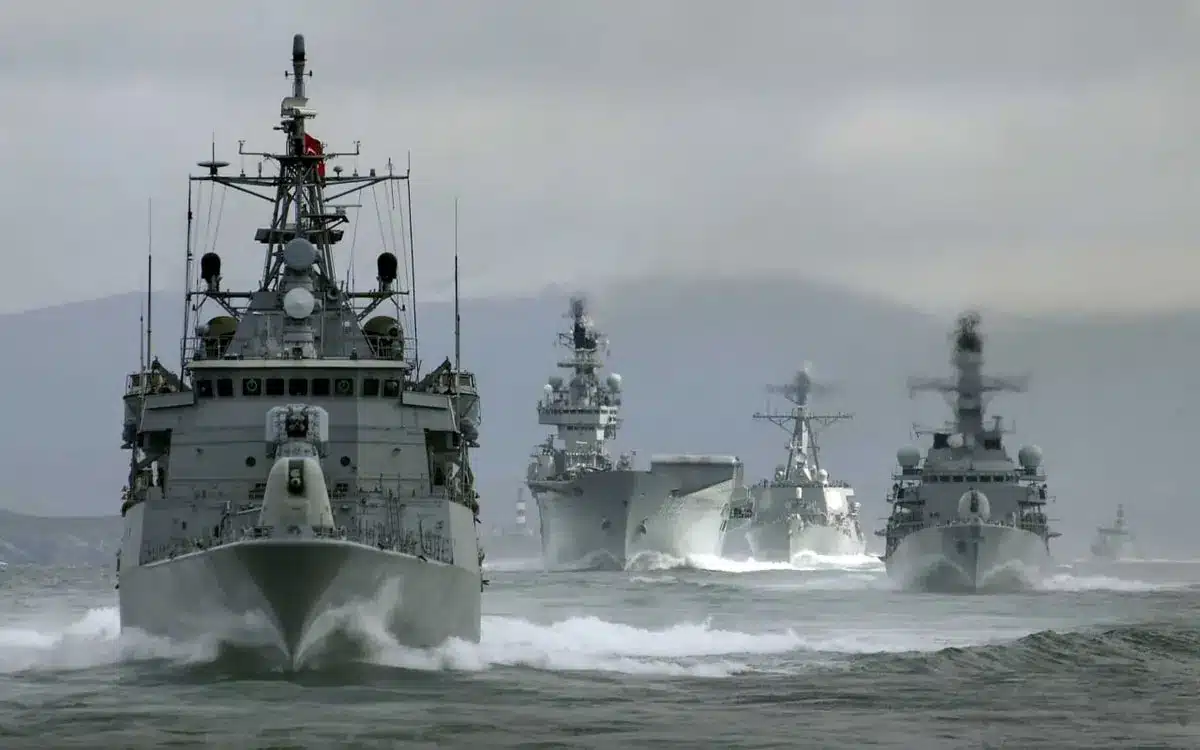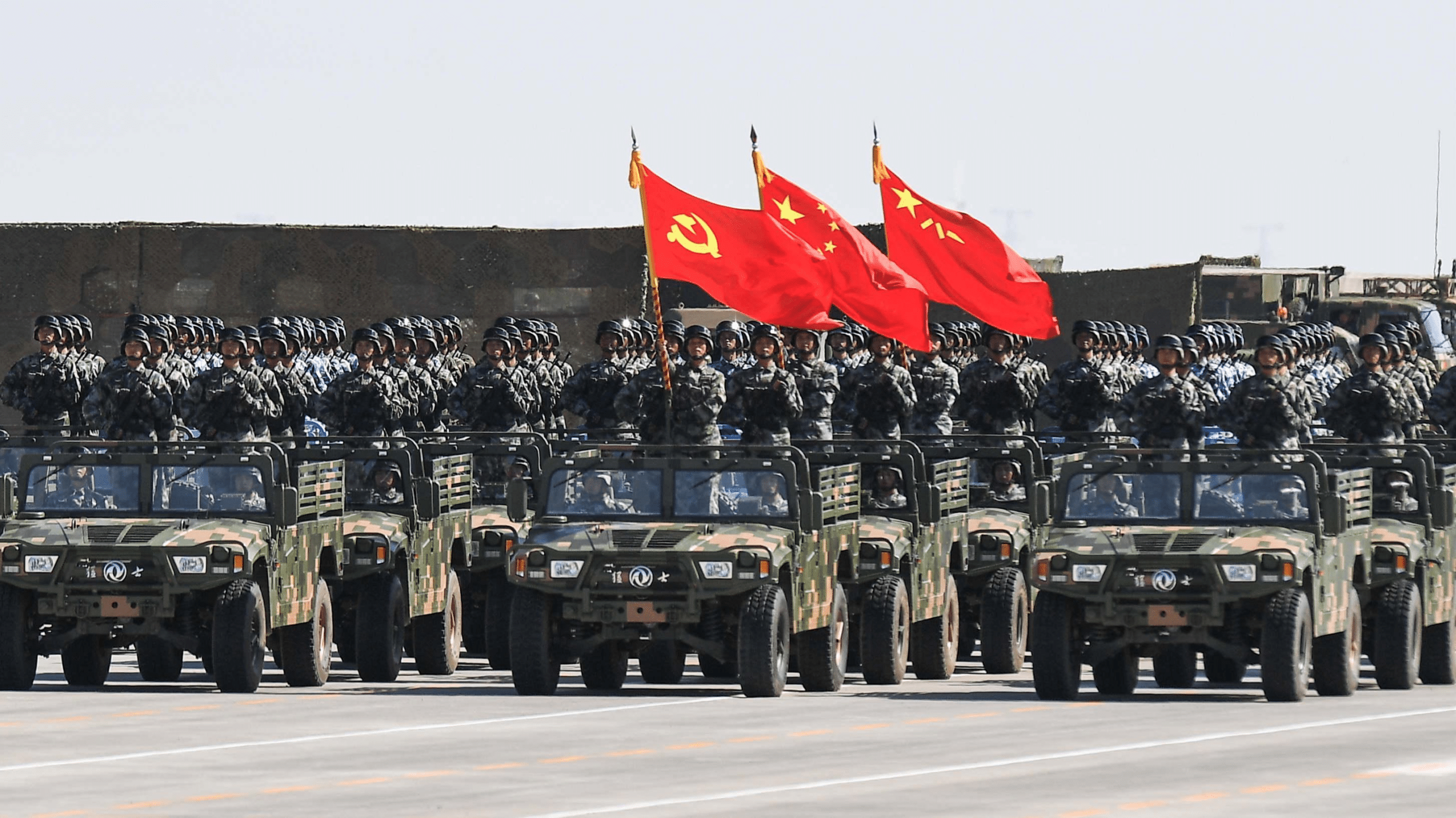



The war in Ukraine has turned the Black Sea into a testbed for asymmetric naval warfare: explosive uncrewed surface vessels, long-range missiles, commercial ISR and systematic sea denial against a superior fleet. From Tokyo to Canberra, Indo-Pacific navies are watching these experiments closely, but they cannot simply copy-paste the Ukrainian playbook into the Pacific, where geography, technology levels and force density change the equation entirely.
What the black sea really shows:
The comeback of the small offensive platform
With no credible blue-water fleet to rely on, Ukraine has bet on explosive USVs (Sea Baby, Magura V5) able to strike at distance for a relatively modest cost. The result: a Russian fleet pushed back, ports turned into high-risk areas and, more recently, sea drones armed with missiles capable of engaging aerial targets as well.

The message for the Indo-Pacific is clear: multiply cheap, expendable vectors to maintain constant attrition pressure.
Large, isolated units have become a luxury
The sinking of Moskva confirmed a trend that was already visible: even a heavily armed flagship remains vulnerable to a coordinated salvo of coastal-defense missiles, especially under a dense ISR umbrella. Without integrated air and missile defense, dispersed basing and effective deception tactics, large platforms become symbolic targets as much as military ones.
Maritime infrastructure as center of gravity
Ports, grain terminals, offshore energy sites, seabed cables and commercial sea lanes have often been the real strategic levers in the Black Sea, more than direct fleet-on-fleet engagements.
For the Indo-Pacific, where economies are heavily dependent on maritime trade, protecting logistical hubs and critical infrastructure is becoming at least as central as the composition of the fleet itself.
Why the Ukrainian template doesn’t copy-paste easily
Three major gaps limit any direct copy-paste from the Black Sea to the Pacific:
- Geography: A semi-enclosed sea versus an open ocean, with radically different distances, strategic depth and options for rerouting traffic.
- Technology level and force density: An Indo-Pacific conflict would unfold under much denser ISR constellations, missile systems and cyber capabilities, involving several major powers simultaneously.
- Alliance architecture: There is no Indo-Pacific equivalent to NATO, even as cooperation between the Alliance and Asian partners deepens. Political-military coordination in theater would be more complex and more fragmented.
At the same time, the Indo-Pacific is already saturated with anti-ship missiles, Chinese A2/AD capabilities and drones of every type. Its geography, Taiwan Strait, South China Sea, island chains and overlapping EEZs, naturally lends itself to layered denial strategies built on mines, coastal missiles, fast small craft and uncrewed systems.
On top of that comes the rise of “hybrid” maritime threats: militarized coast guards, civilian vessels brought into the equation, cyberattacks on ports and sabotage of seabed cables. Ukraine, and in parallel, the Red Sea, has largely normalized the idea that these tools will be used to shape access, economic flows and alliance cohesion below the threshold of open war. That makes the Ukrainian experience directly relevant to the Indo-Pacific.
Four national trajectories in light of Ukraine
Japan: a blue-water navy thinking in terms of attrition
Tokyo is hardening its posture toward China: reinforced integrated air and missile defense, expanded long-range strike, and more resilient basing in the Southwest islands. Ukraine feeds ongoing debates about dispersing forces, protecting sea lines of communication and integrating air and naval drones as attritable complements to a high-end fleet, despite significant constitutional and budgetary constraints.
Taiwan: embracing a maritime “porcupine strategy”
Taiwan openly describes Ukraine as a “case study.” The rise of surface drones such as the Endeavor Manta fits into an asymmetric concept: saturating an invading force with a mix of USVs, mines, coastal batteries and small combatants instead of betting on a few large, vulnerable ships. The goal is to make any amphibious landing costly and uncertain and to buy time.

South Korea: high technology, doctrine still catching up
The Republic of Korea Navy remains geared toward high-end warfare (Aegis destroyers, KDDX, advanced submarines). Ukraine, combined with North Korean drone incursions, is pushing Seoul to invest in USVs, electronic warfare and protection of sea lines of communication. The challenge is to integrate these uncrewed systems into the broader operational concept rather than treating them as peripheral add-ons.
Australia: from power projection to “missile-first”
With the Defence Strategic Review and AUKUS, Canberra has openly pivoted toward long-range strike from land and sea. Ukraine is a political argument for more range, more munitions mass and a more resilient industrial base. In that context, USVs and UUVs are gaining traction as tools for maritime surveillance, anti-submarine warfare and the protection of offshore infrastructure.
A two-way current of influence between Europe and the Indo-Pacific
Ukraine’s naval lessons now run through discussions between NATO and its Indo-Pacific partners (Japan, Australia, South Korea, New Zealand) around three shared priorities: naval drones and autonomy, integrated air and missile defense, and the protection of critical maritime infrastructure, with industrial mass in the background of every conversation.
For European industry, this opens windows for USV/UUV offerings, coastal-defense systems, ISR solutions and resilient C2. But the real depth of cooperation will depend on political constraints around sensitive tech transfer, nuclear propulsion, combat AI and defense exports.
The Black Sea does not predict the Pacific, but it is already shaping the debate. For Indo-Pacific navies, the point is not to “do what Ukraine did,” but to leverage Ukraine’s experimentation to recalibrate their own balance between major platforms and swarms of autonomous systems, between power projection and sea denial, between prestige and attrition, before the next crisis closes the window for adaptation.