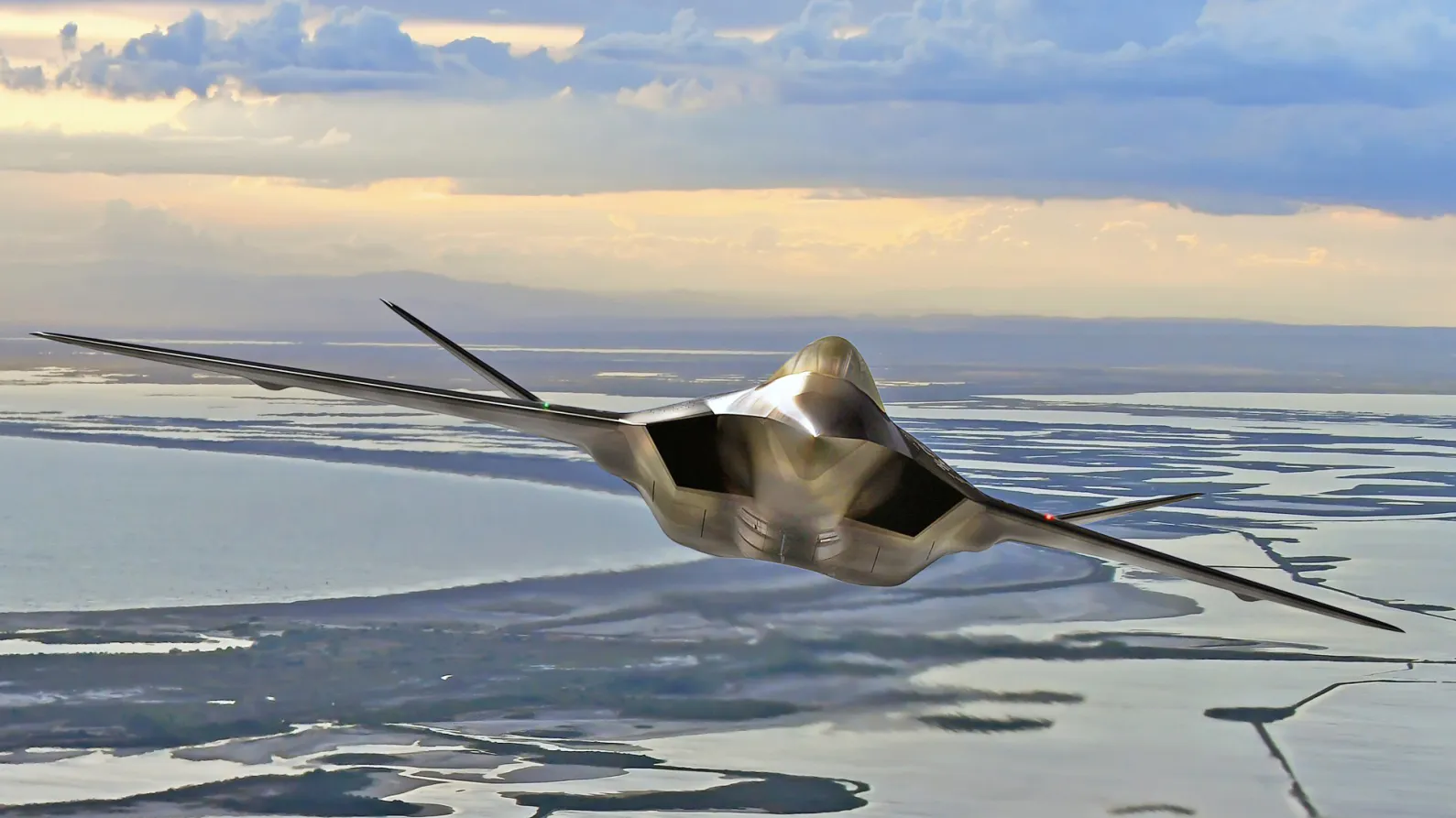



On Oct. 31, 2025, Anduril hit a visible milestone in the U.S. Air Force’s Collaborative Combat Aircraft (CCA) effort: its YFQ-44A prototype flew for the first time, bringing a jet-powered “loyal wingman” concept into measurable flight testing. Two weeks earlier, on Oct. 16, the Netherlands formalized cooperation through a letter of intent signed in Washington by the Dutch State Secretary for Defence, on the sidelines of the Defence Industry Days. Together, the two events underline a broader shift inside NATO: manned–unmanned teaming (MUM-T) is moving from slideware to fieldable pathways.
A “loyal wingman” is an uncrewed combat aircraft designed to operate as a fighter teammate, often framed around the F-35, to push high-value functions forward: ISR (intelligence, surveillance, reconnaissance) sensing, EW (electronic warfare) support, decoys, and potentially strike. Dutch messaging has stressed a key point: these systems are intended to be pilot-controlled from the crewed aircraft, reinforcing CCA’s “collaborative” logic rather than an all-autonomous construct.

An industrial race embraced
For CCA Increment 1, the competitive field now centers on two teams: Anduril (YFQ-44A) and General Atomics (YFQ-42A). The USAF has said the YFQ-42A entered flight testing in late August 2025, and industry communications suggest a push toward pace and repetition, including emphasis on a second air vehicle. Anduril, for its part, is leaning hard on speed: from clean-sheet design to first flight in 556 days, positioning the program around “affordable mass”, more combat-relevant air vehicles, sooner, at a lower unit cost than crewed fighters.

From The Hague’s perspective, the near-term priority is not picking an airframe. It is getting into the most shaping layer of the stack: interfaces, integration, and payloads. The letter of intent and public remarks highlight interoperability, technology cooperation, and ensuring allied systems can “speak the same language”, a signal that CCA’s decisive edge may sit as much in open architecture and software as in the aircraft itself.
The core proposition remains cost-per-effect: generate a mass of jet-speed uncrewed platforms, faster to build and cheaper than fighters, to spread risk, saturate defenses, and compress upgrade cycles via software-driven iteration. The USAF is aiming for a competitive production decision in 2026 for Increment 1, with an operational capability targeted by the end of the decade, a timeline that forces early answers on security, integration, and employment doctrine.
Why it matters on NATO’s eastern flank?
In a contested theater, where jamming and electronic attack degrade sensors, navigation, and datalinks, the operational logic is direct: push ISR scouts forward, probe and deceive with decoys and EW, shift risk onto SEAD/DEAD missions (Suppression/Destruction of Enemy Air Defenses), and preserve mission continuity through LPI/LPD (low probability of intercept/detection) communications, EMCON (emissions control) discipline, and alt-PNT (alternative positioning, navigation, timing) options.
The “Europe is shifting” story is real, but uneven. In early December 2025, Saab and Airbus confirmed discussions on collaborative combat drones to accompany Eurofighter and Gripen, while FCAS/SCAF remains in a period of uncertainty amid industrial and political friction. In that context, Dutch alignment with the U.S. CCA track also looks pragmatic: gain rapid access to standards, flight-test learning, and MUM-T concepts of operations, while building payload and integration bricks that could be reused in European pathways.
Over the next 12–18 months, the key indicators to watch will be NATO standards maturation, payload integration (EW/ISR/decoy/strike), the first demonstrations focused on operational effects, and whether Europe’s parallel efforts (Saab–Airbus, FCAS-related initiatives, and others) converge with, or diverge from, this transatlantic fast track.